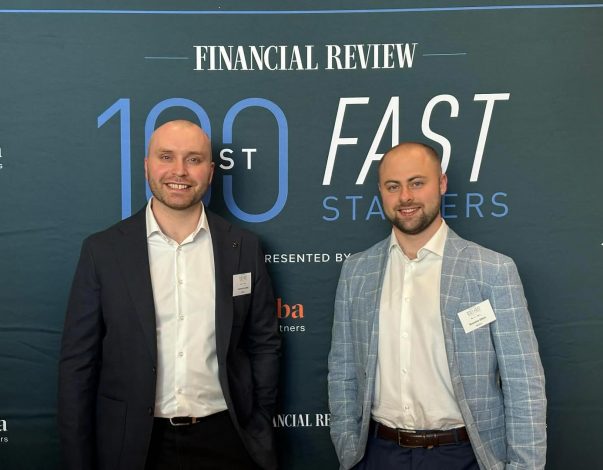
Blufire designs and operates paid media systems that scale with commercial reality. Across managed accounts, this approach has supported eight-figure annual revenue growth, sustained CPA reductions, and predictable scaling across peak and off-peak demand cycles.


As paid media investment increases, execution complexity grows faster than most teams expect. What begins as a manageable optimisation exercise becomes a system-level problem, where performance signals fragment and confidence in decision-making erodes.
At scale, paid media rarely fails because teams lack skill. It fails because execution is governed by platform metrics that no longer reflect commercial reality. Without structural alignment to revenue, margin, and operational capacity, growth decisions become reactive rather than intentional.
Paid Media Architecture exists to remove these bottlenecks and restore control as spend scales.
As accounts scale, platforms surface more data, more recommendations, and more performance signals.
While metrics such as CPA, ROAS, and CTR may appear stable or improving, they often mask underlying inefficiencies.
Without architectural context, teams optimise to what platforms make visible, not to what actually drives scalable revenue. This creates situations where paid media performance looks healthy, while contribution to pipeline quality, revenue timing, and margin quietly deteriorates.
At lower spend levels, optimisation delivers meaningful gains through bid adjustments, targeting refinements, and creative swaps. As spend scales, these levers produce diminishing returns.
Without deliberate account architecture, teams become locked into incremental optimisation cycles that fail to unlock new performance ceilings. Growth slows not because demand disappears, but because the system itself limits how efficiently spend can expand.
Most paid media scale failures are blamed on rising costs or audience saturation, when the real constraint is creative execution.
As spend increases, creative fatigue accelerates, testing velocity slows, and messaging becomes less differentiated. Without a structured creative system aligned to volume requirements, performance decays long before targeting or bidding strategies reach their limits.
Campaign and account structures that perform well at modest budgets often break under scale.
Audience overlap increases, learning phases reset, and budget allocation becomes reactive rather than intentional.
Without architecture designed for scale, performance volatility increases and efficiency erodes. At this stage, optimisation alone cannot compensate for structural weaknesses embedded in how the account is built.
As accounts scale, platforms surface more data, more recommendations, and more performance signals.
While metrics such as CPA, ROAS, and CTR may appear stable or improving, they often mask underlying inefficiencies.
Without architectural context, teams optimise to what platforms make visible, not to what actually drives scalable revenue. This creates situations where paid media performance looks healthy, while contribution to pipeline quality, revenue timing, and margin quietly deteriorates.
At lower spend levels, optimisation delivers meaningful gains through bid adjustments, targeting refinements, and creative swaps. As spend scales, these levers produce diminishing returns.
Without deliberate account architecture, teams become locked into incremental optimisation cycles that fail to unlock new performance ceilings. Growth slows not because demand disappears, but because the system itself limits how efficiently spend can expand.
Most paid media scale failures are blamed on rising costs or audience saturation, when the real constraint is creative execution.
As spend increases, creative fatigue accelerates, testing velocity slows, and messaging becomes less differentiated. Without a structured creative system aligned to volume requirements, performance decays long before targeting or bidding strategies reach their limits.
Campaign and account structures that perform well at modest budgets often break under scale.
Audience overlap increases, learning phases reset, and budget allocation becomes reactive rather than intentional.
Without architecture designed for scale, performance volatility increases and efficiency erodes. At this stage, optimisation alone cannot compensate for structural weaknesses embedded in how the account is built.
Paid media at scale is not about buying traffic efficiently. It is about designing a system that converts investment into predictable revenue while protecting margins, pipeline quality, and operational capacity.
Before platform selection or budget allocation, we establish a clear view of revenue targets, margin requirements, seasonality, sales performance, and capacity constraints. Paid media performance is assessed in the context of close rates, revenue timing, and pipeline quality, not just CPA or ROAS.
This ensures spend levels, efficiency targets, and volume expectations are grounded in what the business can realistically convert and deliver, rather than arbitrary budget decisions.
With commercial targets defined, we map demand across markets, audiences, and intent layers.
This includes identifying where high-intent demand already exists, where demand must be created, and how buyers move between awareness, consideration, and conversion. Search, social, and performance channels are treated differently based on their role in the revenue journey.
Google and Meta are evaluated as distinct tools within the system, not interchangeable traffic sources, ensuring each platform is used where it can most effectively support revenue quality and sales outcomes.
Account structure is designed to support scale, not just early performance.
Campaign segmentation, budget distribution, bidding strategy, and conversion prioritisation are aligned to the commercial model. Decisions around channel mix, spend allocation, and CPA tolerance are made based on business objectives such as lead quality, close rate optimisation, or revenue velocity.
This prevents the common failure mode where spend increases but performance degrades due to fragile structure or misaligned optimisation goals.
Creative is treated as a growth system, not an asset library.
We design creative testing frameworks that align message, offer, and format to specific stages of demand. Creative volume, testing cadence, and fatigue management are planned in advance to support scaling budgets across both Google and Meta environments.
Insights from performance data feed directly into creative direction, ensuring messaging evolves based on buyer response rather than subjective opinion. This is where many competitors fail by underinvesting in creative depth or relying on limited variations.
Spend increases are tied to predefined performance thresholds and commercial outcomes, with ongoing reconciliation between forecasted expectations and actual results. Platform metrics are reviewed alongside sales performance and revenue contribution to identify variance drivers early.
This ensures paid media remains controlled as volume grows, protecting efficiency, pipeline quality, and confidence at the leadership level.
“The team at Blufire are professional, responsive, and easy to work with. They provide clear insight into performance and deliver measurable results across paid media and SEO. We’ve seen strong outcomes since engaging.”
“Nothing is ever too much trouble, and the team consistently go above and beyond to deliver quality outcomes. It’s clear they genuinely care about their clients and take pride in the work they deliver.”
“Blufire was a valuable partner during a period of significant change for our organisation. They were responsive, decisive, and brought the experience needed to move quickly and with confidence.”
“Blufire is one of the strongest marketing teams I’ve worked with in the past decade. They are responsive, highly skilled, and proactive in understanding our business to improve strategy and execution across paid media.”
“I’ve been very impressed with the improvements Blufire have made to our paid digital marketing at Peter Jackson. Their team is proactive, performance-focused, and consistently works to maximise results. They operate as a true partner.”
“Working with Blufire has been a game-changer for our marketing. Their team brought clarity, strategy, and deep expertise to our paid media, helping us better understand the platform and scale results with intention”
When paid media is designed around commercial targets rather than platform metrics, leadership gains clearer control over growth, spend efficiency, and risk as investment scales. This approach shifts paid media from a cost centre to a predictable revenue lever.
Most paid media breaks when budgets increase. Account structure, bidding logic, and creative rotation are rebuilt to maintain efficiency as volume rises. In practice, this often prevents CPA inflation of 30%+ that occurs when accounts scale without architectural discipline.
Creative is designed for iteration and fatigue resistance, not one-off launches. With structured testing and controlled rollout, accounts typically see 2x3x budget spent on individual creatives, reducing reactive rebuild cycles and wasted spend.
Channel selection is driven by outcome, not habit. Search captures intent, social creates demand, and retargeting converts efficiently. This allocation routinely improves overall blended performance by 15–25% versus single-channel or copy-paste strategies.
What becomes possible when paid media is architected, governed, and optimised for real growth.
Reduction in cost per acquisition
Return on per dollar spent on advertising
Average scaling of budget within business KPI’s
Conversion rate uplift post efficiency changes
Improvement in CaC via paid media
Increase in budget scaling in line with CaC targets
Paid media is most effective when it operates as a system, aligned to sales capacity, operational constraints, and business growth targets, not isolated platform performance.
Paid media operates on a clear execution rhythm rather than reactive optimisation.
Campaign structure, budgets, creative testing, and channel mix are reviewed against agreed growth targets on a consistent schedule.
This creates stability in performance, reduces overreaction to short-term fluctuations, and allows improvements to compound over time.
Paid media performance is reviewed alongside sales conversion behaviour and demand quality, ensuring optimisation decisions support pipeline efficiency and revenue outcomes, not just lower platform costs.
This alignment prevents common breakdowns between marketing and sales and keeps execution focused on what actually converts.
Executives gain clarity on what is driving growth, what is constraining scale, and where incremental investment will have the highest impact. This visibility supports confident budget decisions without requiring leadership to manage execution detail.
Marketing remains autonomous, while outcomes remain transparent.
Working with Blufire feels less like engaging an external agency and more like adding a senior growth function to your team. We embed ourselves in the context of your business, understand the constraints you operate under, and take responsibility for outcomes, not just activity.
You gain a partner who understands your goals, your internal dynamics, and the commercial implications of every decision, allowing growth initiatives to move faster and with greater confidence.
Every recommendation Blufire makes is grounded in data, modelling, and real performance signals. We connect paid media activity to revenue, margin, and pipeline behaviour so decisions are informed by evidence rather than instinct.
This removes ambiguity from growth conversations and gives leadership teams a clear, shared view of what is working, what is not, and where to focus next.
Most growth partners optimise channels in isolation. Blufire operates differently by aligning paid media and creative execution with sales performance, financial outcomes, and operational capacity.
This approach gives leadership teams clarity on what is driving growth, where efficiency is lost, and how to scale without creating downstream issues. It is built for businesses where decisions have real commercial consequences, not theoretical upside.
Blufire’s paid media execution is designed for mid-market and enterprise businesses where ad spend is meaningful enough that structure, governance, and execution quality directly impact revenue, margin, and growth stability.
This typically includes businesses with:
If your goal is purely low-cost lead volume or short-term experimentation without commercial accountability, this approach may be more than you need.
No. Blufire designs and operates full paid media systems, not isolated channel activity.
We work across platforms such as Google, Meta, and other performance channels, but platform selection is driven by business goals, audience behaviour, and commercial targets, not default channel preferences.
Paid media decisions are made based on:
Channels are tools. The system is what matters.
Most paid media management focuses on platform-level optimisation like CPA, ROAS, or CTR in isolation.
Blufire focuses on how paid media performs inside the business.
This means:
The result is paid media that scales cleanly, predictably, and sustainably.
Creative is treated as a first-class system, not a supporting asset.
Blufire develops a structured creative testing framework that includes:
This prevents the common failure modes of under-producing creative or relying on a small number of ads to carry performance.
Budgets are not set arbitrarily or based on platform recommendations.
Blufire determines investment levels based on:
This ensures spend is intentional, justified, and aligned to what the business is trying to achieve, not just what can be spent.
Blufire is designed to reduce operational burden, not add to it.
Your team is involved at key points:
Day-to-day execution, optimisation, and creative iteration are handled by Blufire, allowing your team to stay focused on running the business.
Success is measured by outcomes that matter beyond the ad platform.
Depending on the business, this may include:
Platform metrics are used as diagnostic tools, not the definition of success.
Yes. Blufire often works alongside internal marketing teams or complements existing resources.
The role is to bring structure, discipline, and senior execution capability to paid media, especially where internal teams are stretched or better clarity on performance is needed.
The goal is alignment and performance improvement, not replacement for the sake of it.
In most cases, no.
Blufire’s paid media execution is designed for businesses where:
Earlier-stage businesses often get better results from simpler setups focused on fundamentals.
Typically, Blufire requires access to:
This allows performance to be evaluated accurately and decisions to be made with full context.