The retention and lifecycle marketing benchmark
Across a primary dataset of 156,110 direct-to-consumer customers, the repeat-purchase rate is 18.8%. Put plainly: 81.2% of customers buy once and never come back. This study takes that one number apart, then shows the owned-channel lifecycle math that moves it, and what each point of repeat-rate is worth in durable profit.
Most stores live in the high teens, not the 28% the averages report.
The widely circulated DTC repeat-purchase figure sits around 25 to 30%, and Shopify's own merchant data lands near 27% (Shopify, Cohort Retention Analysis). The hard primary number is lower. In a dataset of 156,110 direct-to-consumer customers, only 29,355 ever placed a second order, a repeat rate of 18.8% (BS&Co, Repeat Purchase Rate Benchmarks). That spread is the first lesson of the study: a blended average masks the fact that most individual stores live in the high teens to low twenties, and the brands clearing 28% are the exception, not the baseline.
Repeat customers were 18.8% of the base but drove 19.6% of revenue in that dataset. The asymmetry is real but modest at the median, which is precisely why retention is treated as optional by operators who have not done the arithmetic. The compounding only shows up once you decompose the curve.
The Australian picture sharpens the case. Australia Post's 2025 eCommerce Report found Australian shoppers now spread their spend across an average of 16 retailers, and 62% switched brands in 2024 chasing a better price, with 9.8 million households spending a record A$69 billion online (Australia Post, Inside Australian Online Shopping 2025). In a market where loyalty is that thin and price-switching that common, the second order is not a nice-to-have. It is the difference between a brand and a one-off transaction.
You cannot fix a retention rate you have only ever seen as a blended average. The curve, not the headline number, is where the money is.
The second order is the inflection, and it compounds
The data behind repeat-buyer momentum is unambiguous. A customer who makes a second purchase is roughly 45% more likely to make a third; a third-time buyer is about 54% more likely to make a fourth (Finsi.ai, echoing the classic RJMetrics CLV research). Each completed purchase raises the conditional probability of the next. Retention is not a flat tax you pay once; it is a probability ladder where the first rung is by far the hardest and the most valuable.
The mechanism is visible at the visit level too. Returning visitors convert at 4.5% to 6.0% against 1.0% to 2.0% for first-time visitors (Shopify). The same traffic, intent and creative monetise three to four times harder once a relationship exists. This is the quiet reason owned-channel lifecycle marketing outperforms cold acquisition on margin: you are selling to people who already convert at a structurally higher rate.
Email and SMS are not retention. They are acquisition you already paid for.
Here is the reframe that changes the budget conversation. Owned-channel revenue, the orders driven by email and SMS to a list you already built, is contribution you capture without paying the marginal acquisition cost again. Every dollar of repeat revenue an automated flow generates is a dollar you did not have to buy on Meta or Google. It is a CAC offset, and it lands at near-zero variable cost.
The efficiency gap between automated flows and one-off campaigns is the single most striking pattern in the 2026 benchmark data. In Klaviyo's 2026 report, built on more than 183,000 brands, automated email flows account for just 5.3% of sends but drive roughly 41% of total email revenue; campaigns carry 94.7% of volume but produce the rest (Klaviyo 2026 Email Benchmarks). On a per-recipient basis, flows earn nearly 18 times the revenue of campaigns. The pattern repeats on SMS: flows are 7.6% of sends and 45.2% of SMS revenue, roughly 8 times the revenue per recipient of SMS campaigns (Klaviyo 2026 SMS Benchmarks).
Flows acquire as well as retain
The flow-versus-campaign split is usually framed as a retention story. The 2026 data says it is also an acquisition story. Nearly 48% of flow-driven email revenue and 64.4% of SMS-flow revenue comes from new buyers, not existing customers (Klaviyo 2026). Welcome and browse-abandon flows convert first-time visitors who would otherwise have leaked away. That is why treating owned channels as a pure retention line item understates them: a meaningful share of their revenue is first-purchase conversion at a fraction of paid CAC.
Engagement confirms the mechanism. Flow emails deliver click rates of 5.58% against 1.69% for campaigns, more than three times higher, and place orders at roughly 13 times the campaign rate per recipient (Klaviyo 2026). Behaviourally triggered messages reach people at the moment of intent. Broadcast campaigns reach them at the moment of the marketing calendar. Intent wins.
Why the channel ROI is so high, and what the number actually means
The figure quoted everywhere is real but worth stating precisely, and it is US data. On average, email marketing returns about US$36 for every US$1 spent (about A$36:A$1 at the prevailing rate, the ratio travels even if the currency does not), the highest ROI of any channel, per Litmus's State of Email research (Litmus, Email Marketing ROI, US). The original lineage of the metric is the Data & Marketing Association's email-ROI studies, which Litmus and others have since carried forward. The honest caveat: the denominator (platform and creative cost) is small and the numerator (attributed revenue) usually rests on last-touch email attribution, so the headline overstates the incremental truth. Read 36:1 as evidence that owned channels are structurally cheap to operate, not as a literal incremental multiple. The defensible claim is the relative one: owned channels carry the lowest marginal cost of any revenue source you run.
SMS sits alongside email as a complement, not a substitute. Across published benchmarks, SMS open rates approach 98% against roughly 20% for email, and SMS click-through commonly runs near 18% versus low single digits for email (Emarsys SMS statistics roundup). SMS opt-out is low, with per-send rates around 0.42% (Digital Applied, SMS Statistics 2026). The operating implication: reserve SMS for time-sensitive, high-intent moments (cart, back-in-stock, shipping) where immediacy converts, and let email carry the narrative work.
What one point of repeat-rate is worth, in durable profit.
Customer lifetime value is multiplicative, which is why small changes in the repeat side compound. The textbook decomposition:
And the breakeven that ties retention to the budget meeting. Owned-channel revenue is contribution you keep, so its value is best read against the cost of buying the same revenue cold. The CAC-offset logic:
One point of repeat-rate, on a mid-market brand, is worth roughly forty-four thousand dollars of contribution a year, recurring, at almost no marginal cost. The AOV input here is set at A$74, anchored to the US$74 paid-channel median (Triple Whale / Shopify benchmark range, US data) used as a round demonstrative figure, and contribution margin uses the 25% Finaloop median for 7-to-8-figure brands (US data). These are demonstrative inputs; substitute your own Australian AOV and margin and the structure holds. The same point bought through paid acquisition would cost the new-customer CAC on every one of those 2,700 orders.
Retention is not a softer version of growth. It is the highest-margin growth you have, because the customer is already converted and the channel is already paid for.
The financial case, stated by the people who measured it
Two findings anchor the economics. Bain & Company's work (Frederick Reichheld) found that increasing customer retention by 5% can raise profits by 25% to as much as 95%, and that acquiring a new customer costs 5 to 25 times more than retaining an existing one (Bain, via Yotpo). Bain also reported the probability of selling to an existing customer at 60% to 70%, against 5% to 20% for a new prospect. The retention premium is not a marketing slogan; it is one of the most replicated findings in customer economics.
For subscription and replenishment models, the analogue is churn. Across 1,200-plus subscription sites, Recurly measured average monthly churn at 3.27% (2.41% voluntary plus 0.86% involuntary), with consumer DTC subscriptions churning higher, near 6.5% (Recurly Research, Churn Benchmarks). The actionable detail: involuntary churn (failed payments) is roughly a quarter of total churn and is largely recoverable through dunning, the single most cost-effective retention intervention most brands never instrument.
Retention is a category property before it is a brand property.
Repeat rates diverge sharply by what you sell, because purchase cadence is set by the product, not the marketing. Consumables (supplements, food, pet) replenish and retain at 35% to 45%; beauty and skincare at 30% to 40%; apparel at 25% to 32%; home goods and electronics at 12% to 25% on far longer cycles (Finsi.ai; Mageloyalty 2026). Repeat-purchase intent by industry spans from roughly 9.9% in luxury to 65.2% in grocery. Judge your number against your category, never against the cross-industry blend.
How the retention curve is read, in baseline terms
Practitioners fit cohort retention with a power law, R(t) ≈ a × t−k, estimated by ordinary least squares on the log-log transform (log R against log t), then extrapolated to a steady state (Churnkey; Userpilot). The decay exponent k describes how fast the cohort sheds; the asymptote, the height at which the curve flattens, is the loyal-customer rate. Three canonical shapes follow: declining (never flattens, no product-market fit), flattening (steep early drop to a stable floor, the healthy DTC norm), and smiling (flattens then rises as dormant customers reactivate, the strongest signal). The earlier and higher a cohort flattens, the healthier the book of business. This is standard, published cohort method; it is the lens, not the engine.
Time the lifecycle to the data, not the calendar.
The second-order timing distribution is a direct instruction set for flow design. Because 50.3% of second orders arrive within 30 days and 76.4% within 90, the post-purchase sequence should concentrate its weight inside the first 30 days, with a clear 60 and 90-day checkpoint before a customer is treated as at-risk (BS&Co). Notably, 77% of second purchases in that dataset were a reorder of the same product, so replenishment timing beats cross-sell for most categories: remind people to rebuy what they already chose.
- Days 0-30 (capture the median). Welcome and post-purchase flows carry the most weight here. Abandoned-cart, the highest-RPR flow at US$3.65 (Klaviyo, global), runs continuously alongside.
- Days 30-90 (the window where three quarters of repeats land). Replenishment and product-specific reorder prompts, timed to the consumption cycle of the category.
- Day 90+ (win-back). A customer past the 90-day mark with no second order is statistically at-risk; this is where a win-back flow earns its place, before the customer is functionally lost. Recover involuntary churn first via payment dunning.
Welcome flows are the second-highest earner per recipient (US$2.65 RPR, Klaviyo global) for a structural reason: they greet a buyer at peak intent, immediately after the first action. The lifecycle's job is to engineer more of those high-intent moments and to message into them automatically.
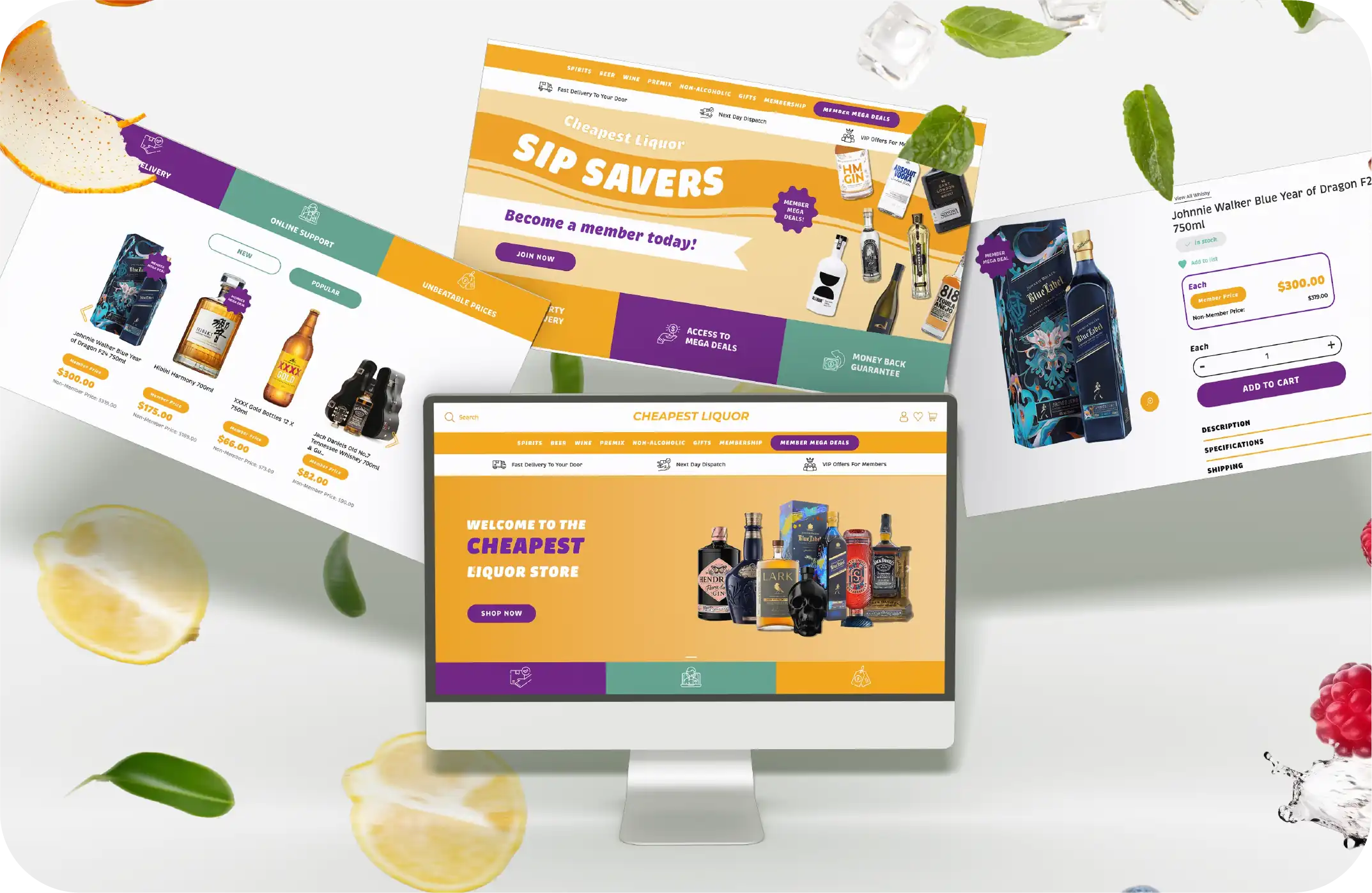
Cheapest Liquor, winner of Best PPC Campaign at the APAC Search Awards, reached a 10.2x blended return and $1.85M in revenue influenced by treating repeat purchase and owned-channel lifecycle as a margin lever, not an afterthought. The economics in this study are the same ones that move accounts like this one.
Methodology and sourcing
The numbers, in one place.
| Metric | Email flows | Email campaigns | SMS flows | SMS campaigns |
|---|---|---|---|---|
| Share of sends | 5.3% | 94.7% | 7.6% | 92.4% |
| Share of channel revenue | ~41% | ~59% | 45.2% | 54.8% |
| Click rate | 5.58% | 1.69% | ~10% | lower |
| Revenue from new buyers | ~48% | ~16% | 64.4% | lower |
| Per-recipient revenue advantage of flows | ~18x campaigns | ~8x campaigns | ||
| Flow | Avg RPR | Open rate | Conversion | Top-10% RPR |
|---|---|---|---|---|
| Abandoned cart | US$3.65 | 50.5% | 3.33% | US$28.89 |
| Welcome | US$2.65 | n/a | n/a | n/a |
| Finding | Figure | Source |
|---|---|---|
| DTC repeat-purchase rate | 18.8% | BS&Co (156K) |
| Second orders within 30 / 90 days | 50.3% / 76.4% | BS&Co |
| Lift to 3rd purchase after 2nd | +45% | Finsi.ai |
| Subscription monthly churn | 3.27% | Recurly (1,200+ sites) |
| Email marketing ROI | US$36 : $1 | Litmus 2025 (US) |
| Profit lift from +5pt retention | 25-95% | Bain |
See your repeat curve, your flow economics, and the points of retention worth chasing.
We reconcile orders, costs and owned-channel revenue to contribution margin, then show what each point of repeat-rate is worth, and the lifecycle move that earns it.