Thirteen sections. One number.
Blufire reads your true contribution margin - what is actually left after product costs, shipping, fees, discounts and ad spend. Thirteen sections turn that one number into decisions: what to sell, what to stop discounting, where spend actually pays back, and which customers to win back.
See the margin you actually kept, and what moved it.
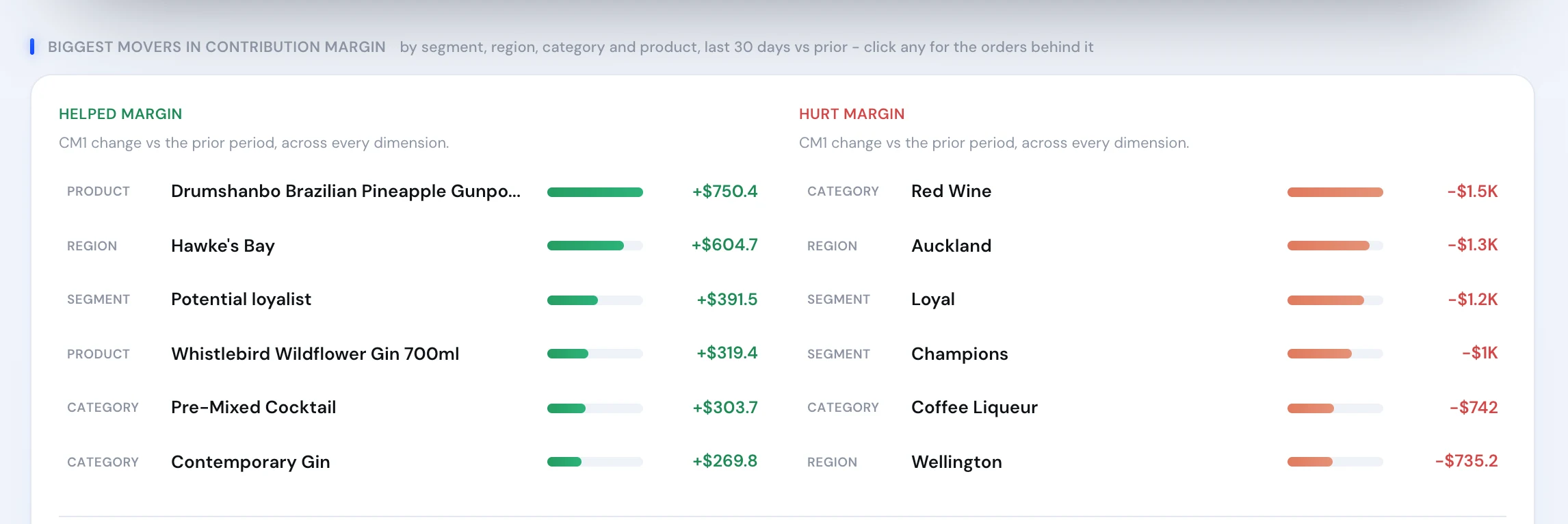
The money group reads the business in CM1 terms: the executive read at the top, the unit economics underneath it, and the discounts quietly giving margin away.
One read of the business in CM1 terms: what you kept, what changed it, and your biggest problems ranked for your seat - CEO, CFO, CMO, growth or ops - with a data health page behind every number.
Pivot profit by product, channel or cohort to see exactly where margin is made and where it leaks, what each channel really pays to acquire a customer, and how long that customer takes to pay it back.
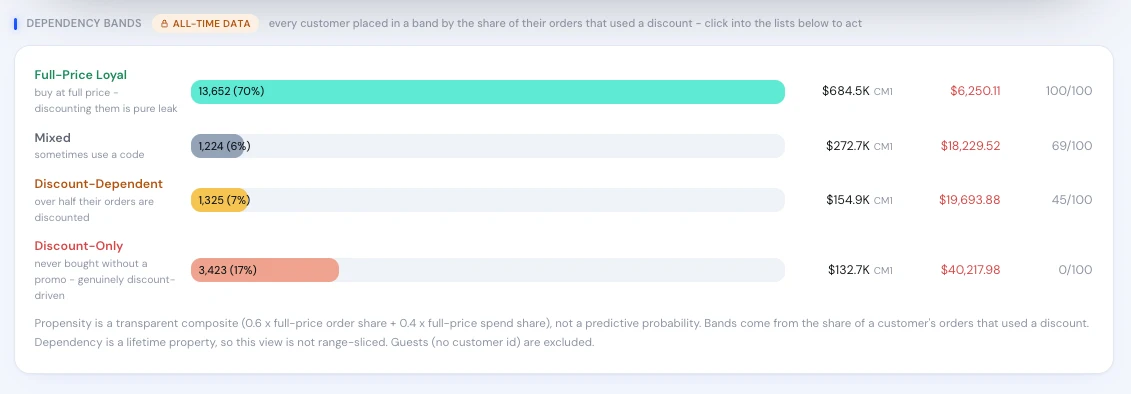
The promo ledger shows which codes earn incremental margin and which give it away, which customers would have paid full price anyway, and what a restructured promo plan would return.
The same CM1 math every other section reads
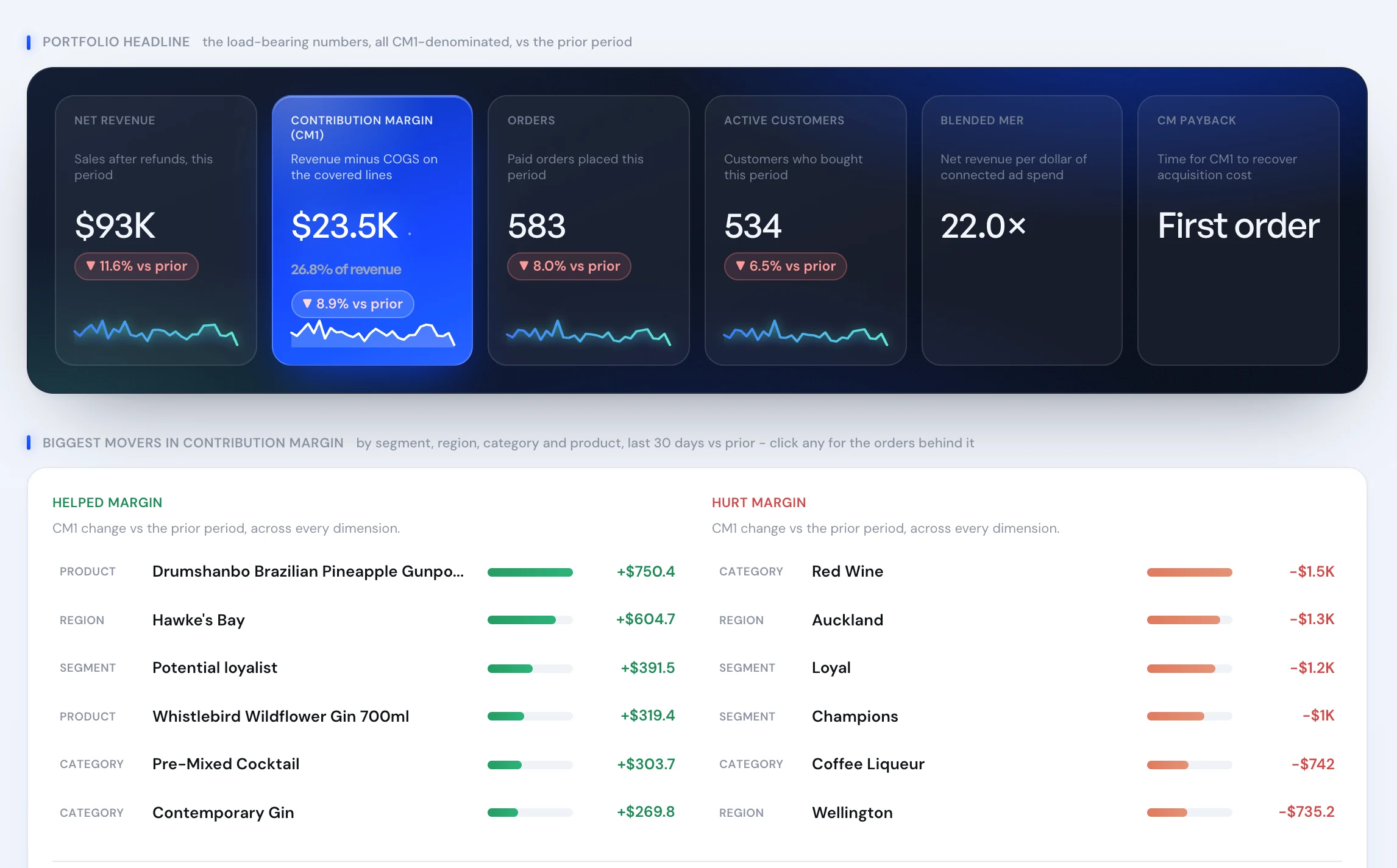
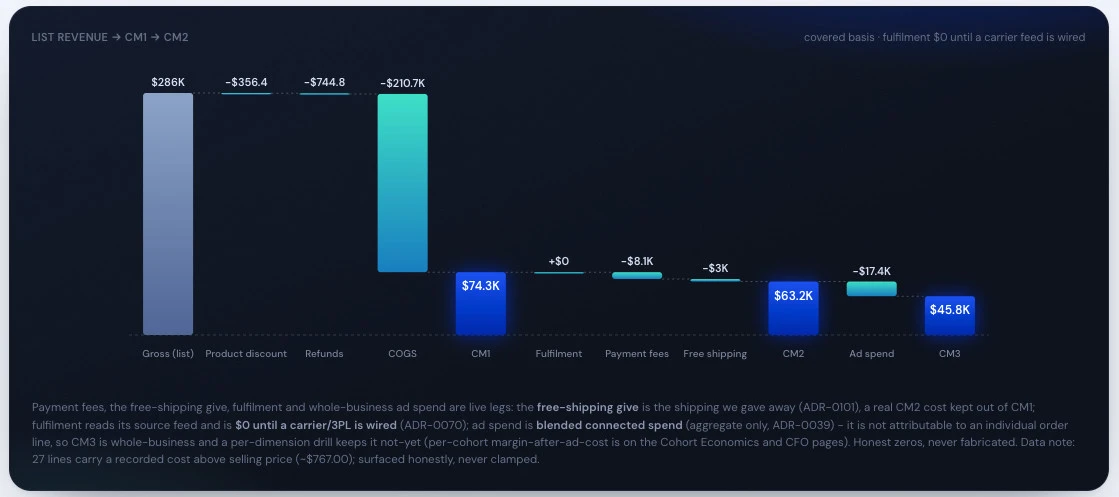
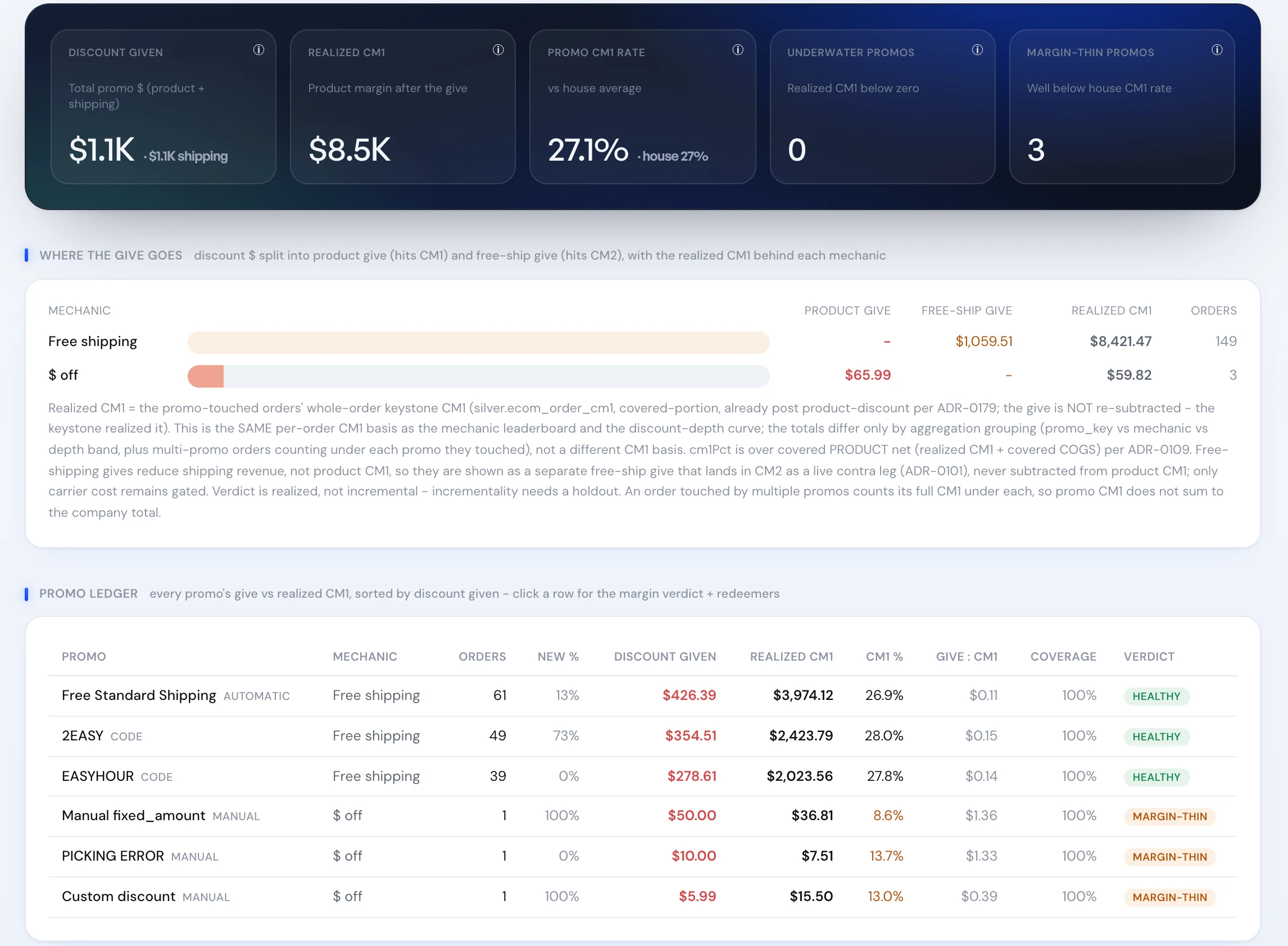
Product screens from a live store. Client name withheld.
Know who your customers are, and what they are worth.
Not orders - people. Every buyer valued in margin terms, and a base you can finally name, segment and act on.
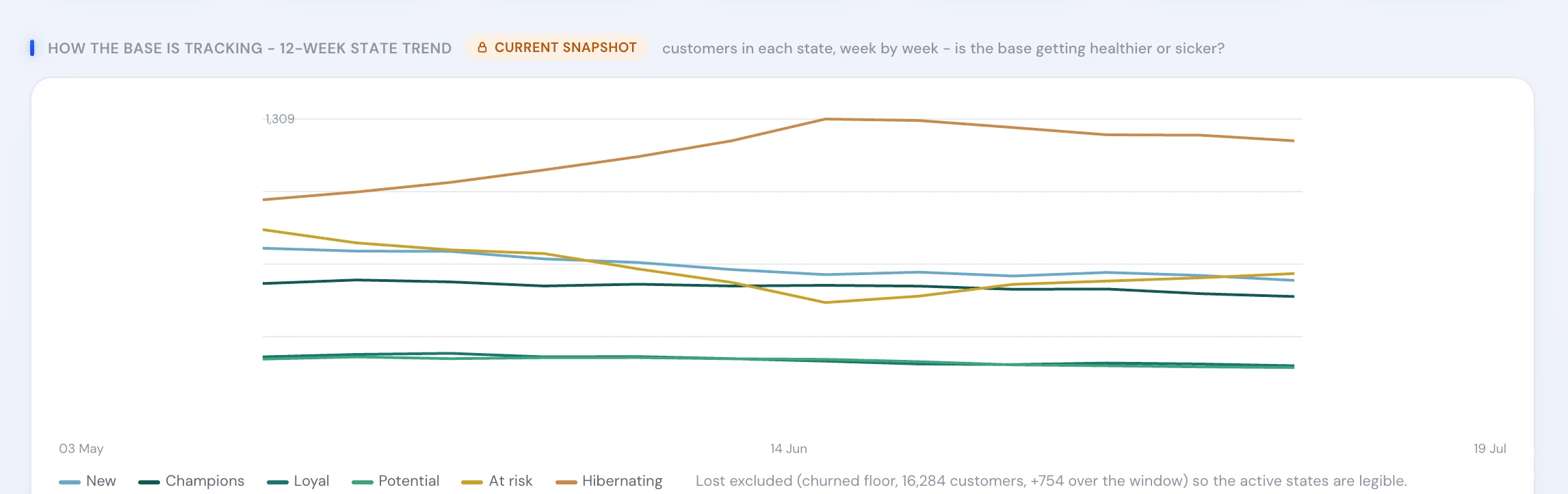
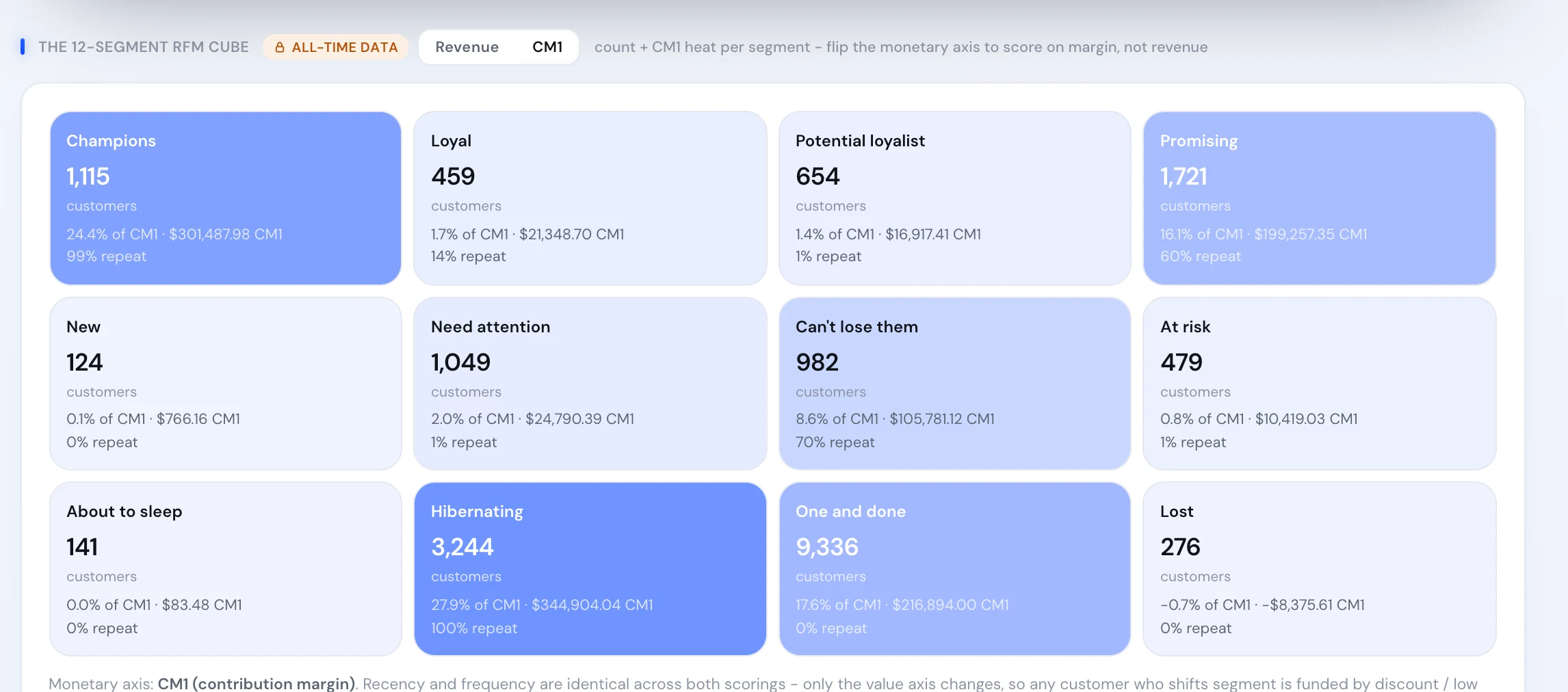
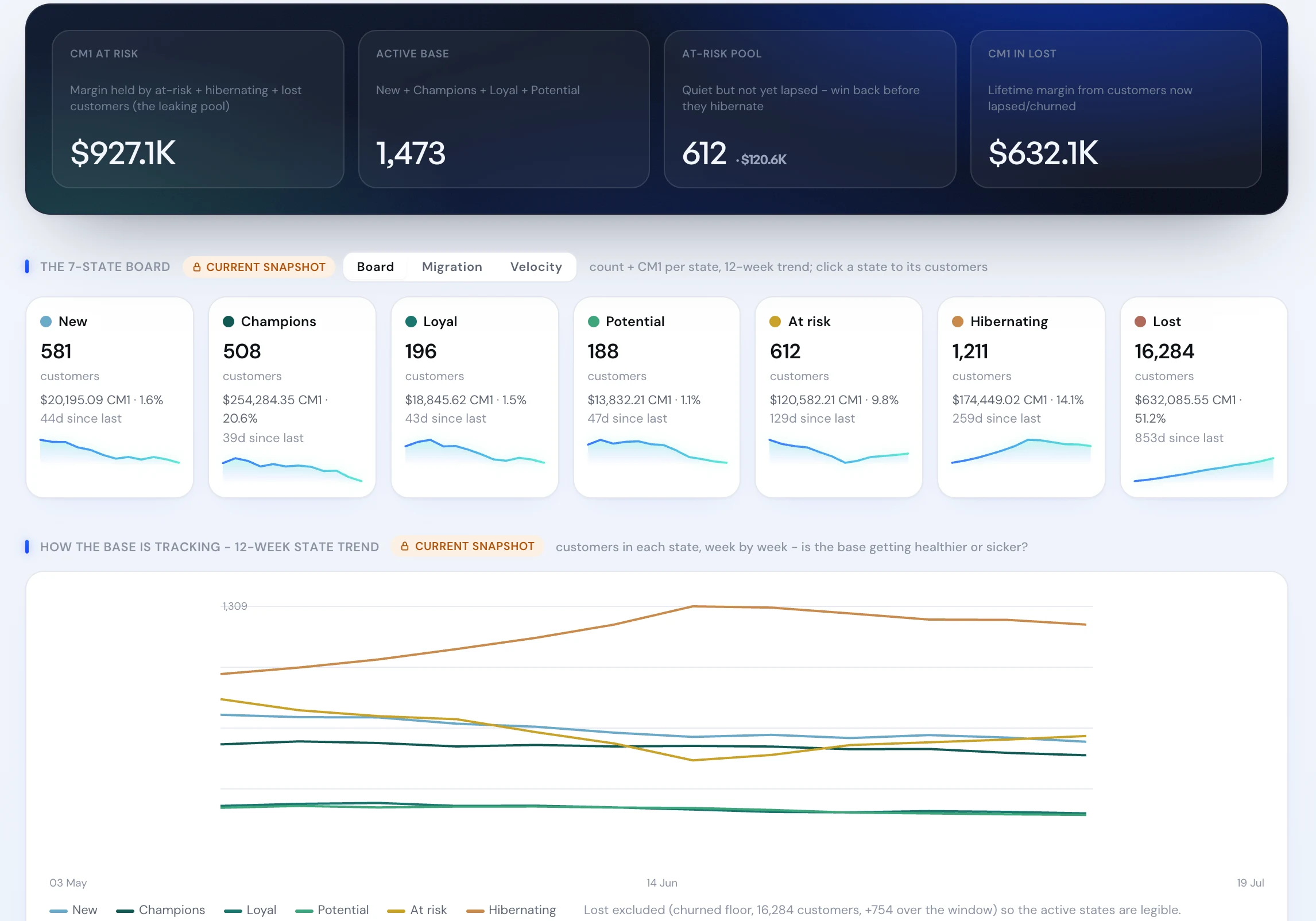
Every customer valued over their whole life in margin terms: the lifecycle state they sit in today, who is drifting toward churn, what they are likely to be worth next - and any number drills to the actual customer list.
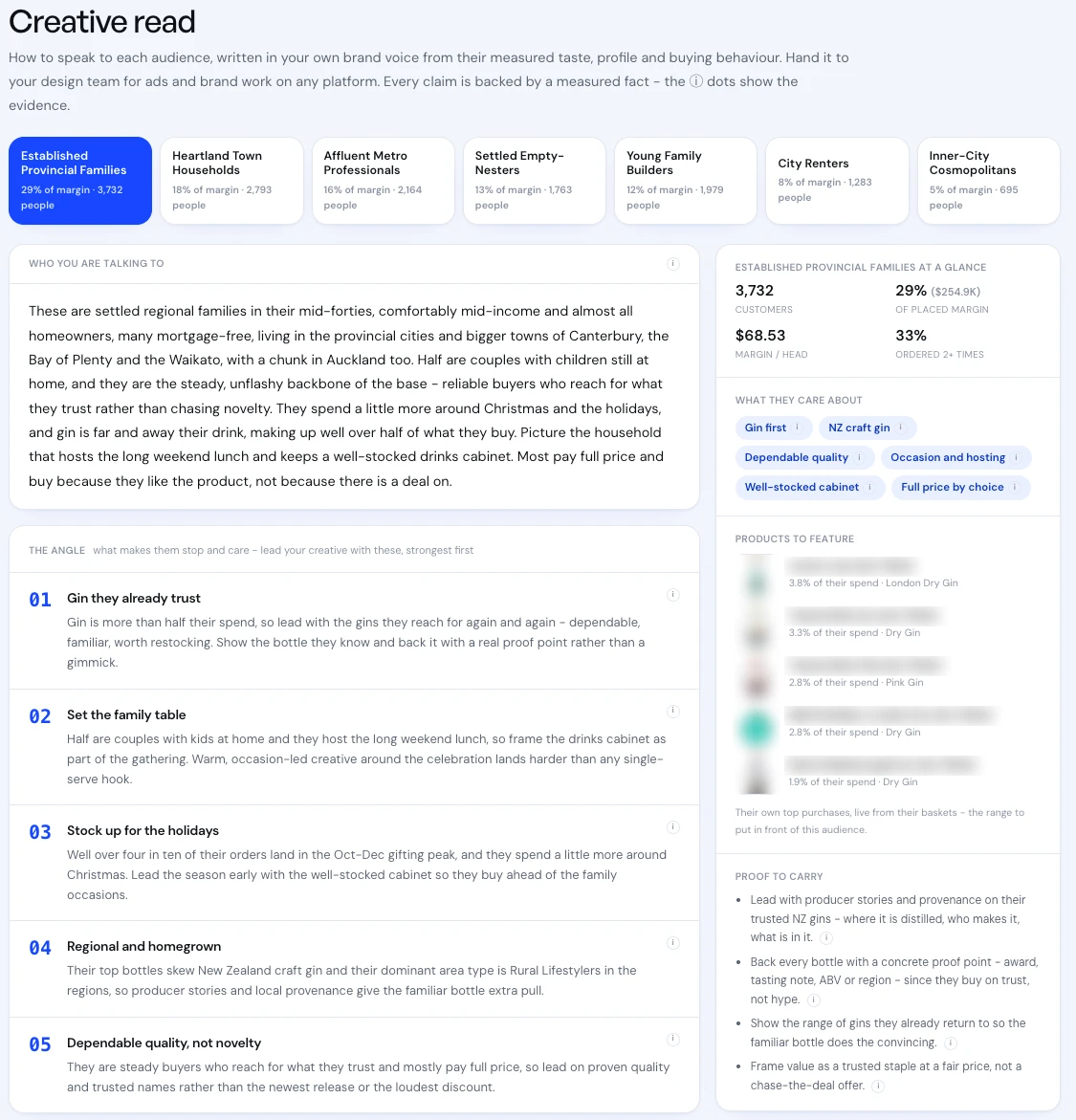
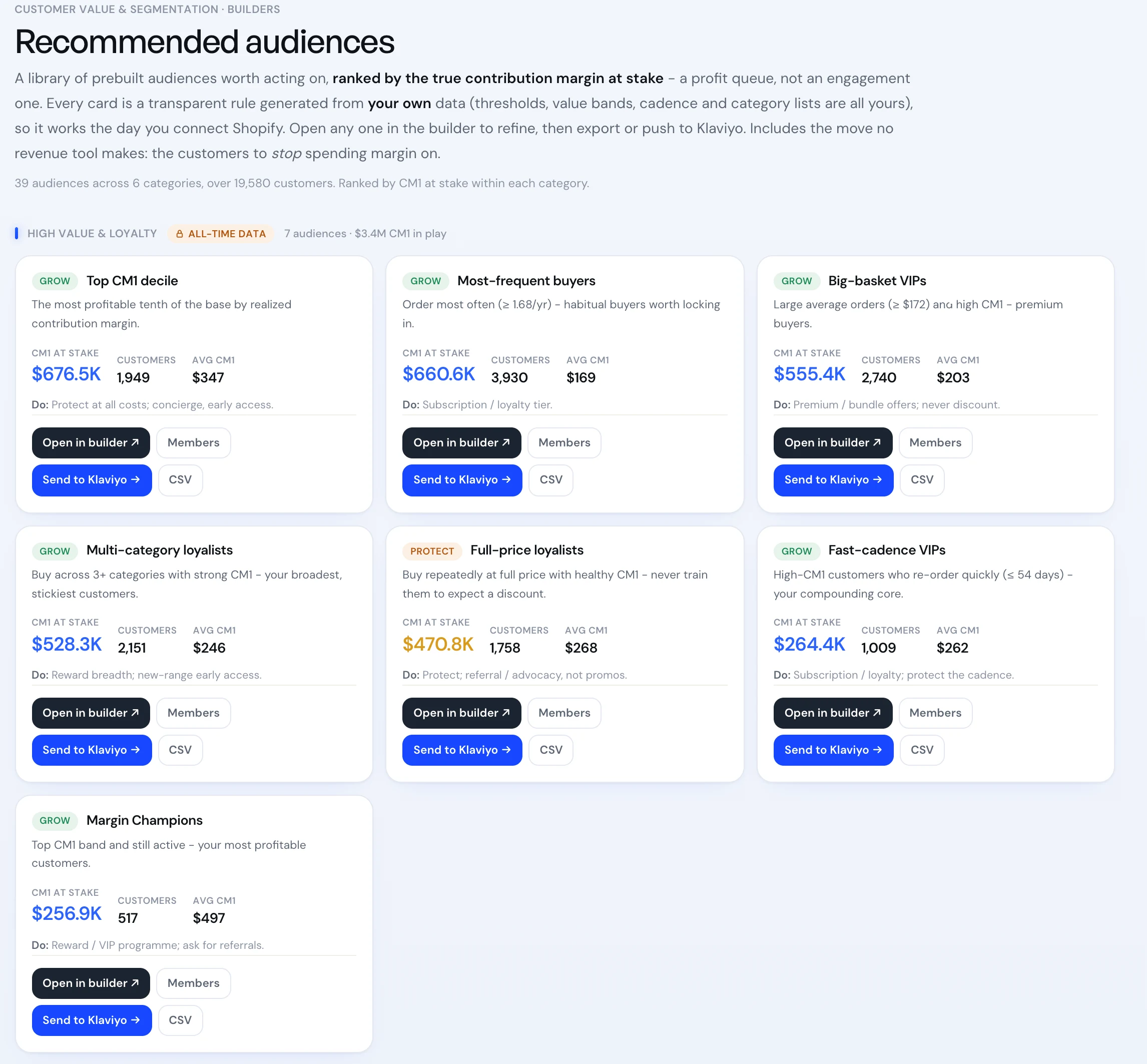
Your customers as nameable audiences - who they are demographically and psychographically, what to sell each one, and the acquisition levers that grow your best - each with a grounded creative brief.
Margin-true value, not revenue value
Spend where profitable customers actually come from.
Attribution you can interrogate, channels read in CM1, audiences that land in the platforms and report back, and creative ranked by what it earns.
Attribution models compared side by side instead of trusted blindly: the journeys customers actually take, where the funnel leaks, and one published source-of-truth mapping that every other section reads.
Channel x customer x product in one CM1 view - whether each channel is acquiring profitable customers, what those customers become, and how email and SMS flows really stack up against campaigns.
Push an audience to Klaviyo, Google or Meta and know it actually landed - then read the round trip in CM1 to see whether the activation paid for itself.
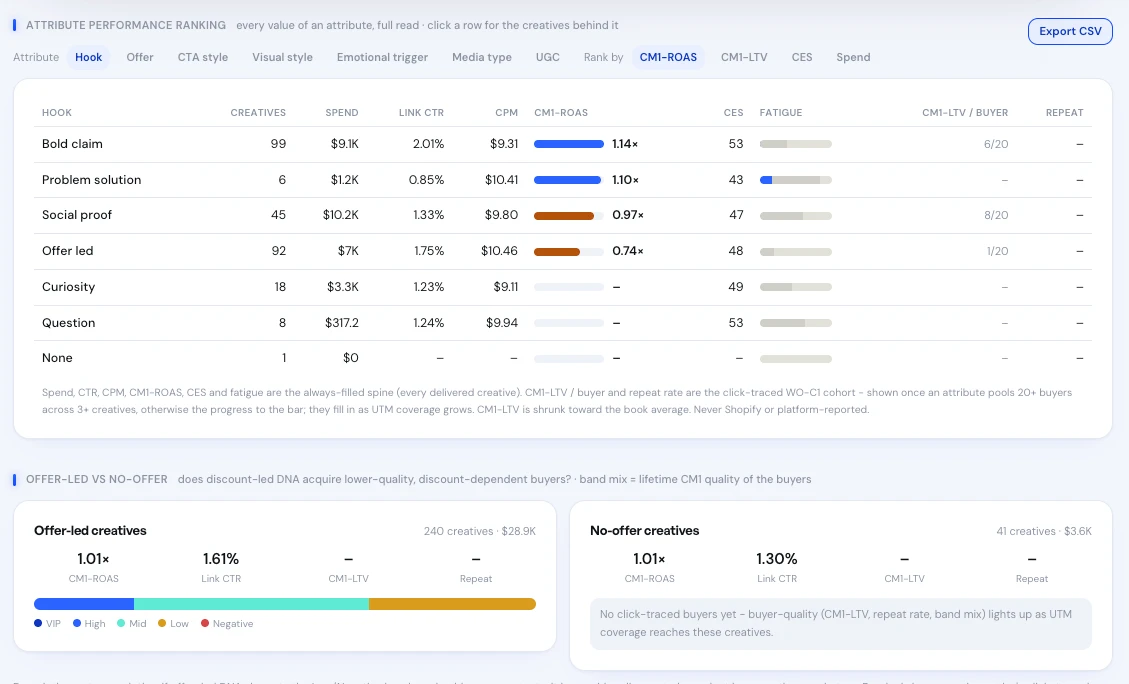
Every ad asset ranked by the margin it earns, fatigue caught before it bleeds spend, and the attributes that win surfaced - margin-true, not platform ROAS.
Audiences go out, margin comes back
Run the catalog, the plan and the proof from one place.
The unglamorous work that decides the quarter: stock, plans, models and proof - all reading the same margin math.
Which SKUs earn and which bleed: what to reorder before it stocks out, what to clear before it goes dead, and what returns really cost - drillable straight to a buy list.
Revenue, margin, demand and cash projected ahead - test a scenario before you commit to it, then track the plan against actuals with a variance waterfall.
The classic ecommerce financial models - cohort LTV, price elasticity, marketing mix, GMROI - each run on your data, each showing its inputs, its formula and the records behind the answer.
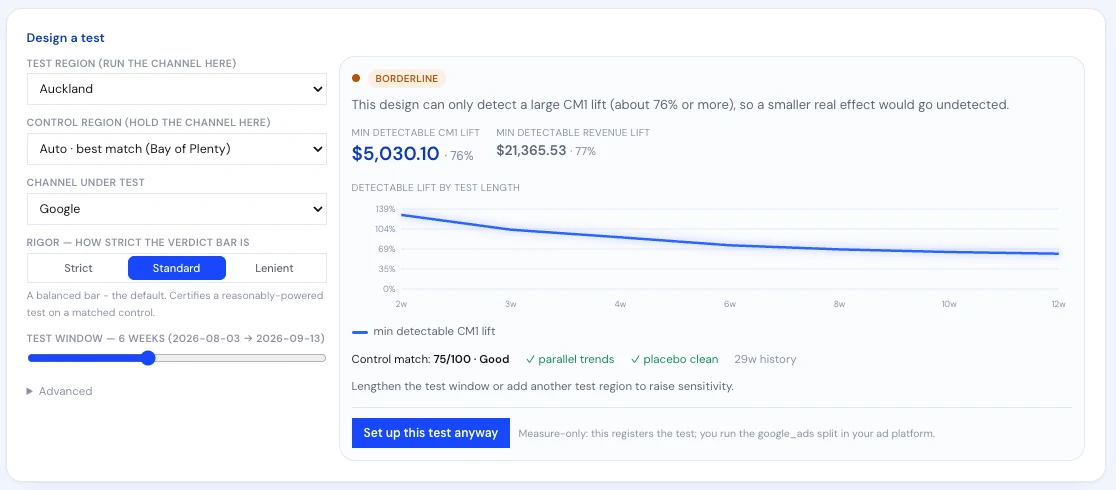
Proof that marketing caused incremental margin rather than just correlating with it: geo-lift tests, email holdouts and ad holdouts, each returning a verdict and a confidence interval in CM1.
Decisions with receipts, not dashboards
 Shopify
 Klaviyo
 Google Ads
 Meta
Meta
30 seconds to connect.
The rest of the rail, on real data.
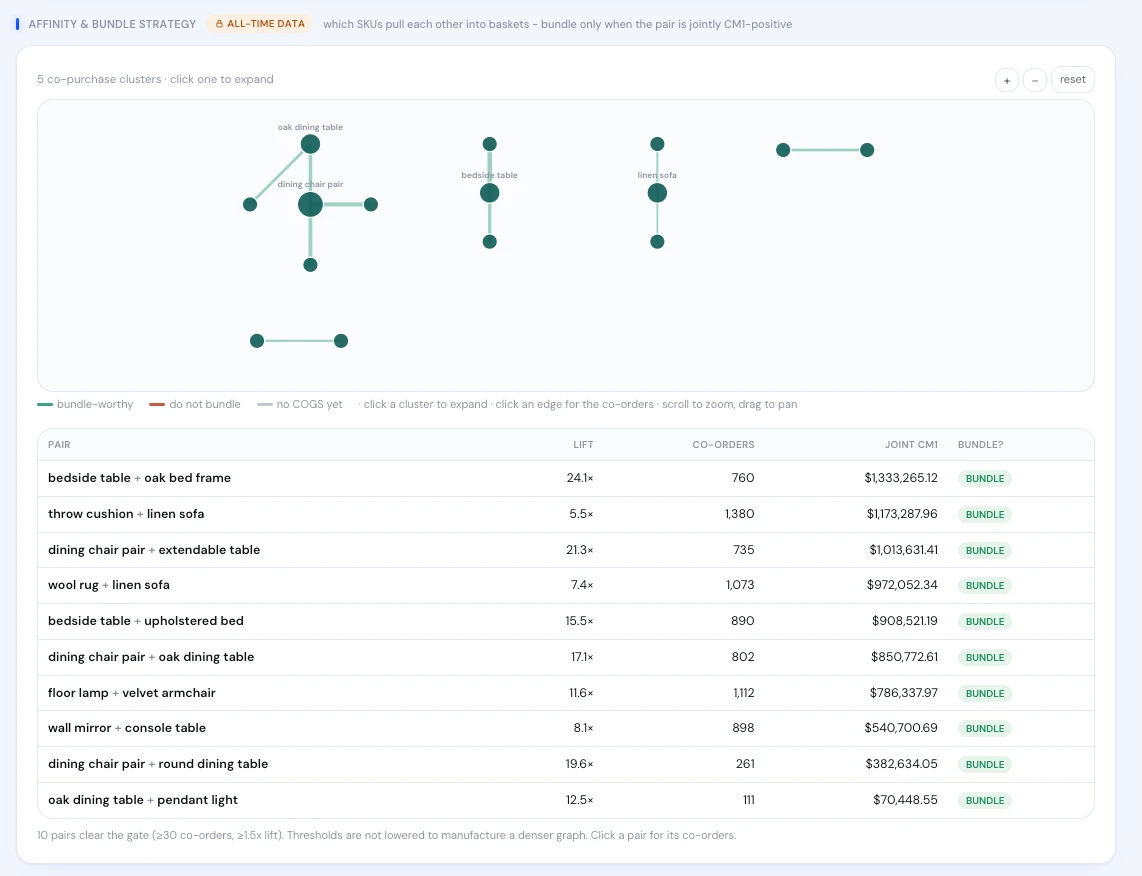
Persona briefs, creative that converts, discount dependency, bundles and holdout tests - the same margin-true engine, everywhere you make a decision.