
NZ$330k in new revenue, from selling what actually paid.
Easy Tiger, a New Zealand online spirits retailer, ran a busy account that was not paying its way. The attribution was wrong, and no one could see where the average order value sat across product categories. Reading it properly showed that wine carried a far higher AOV, so the advertising was pointed at it, and the new revenue followed.
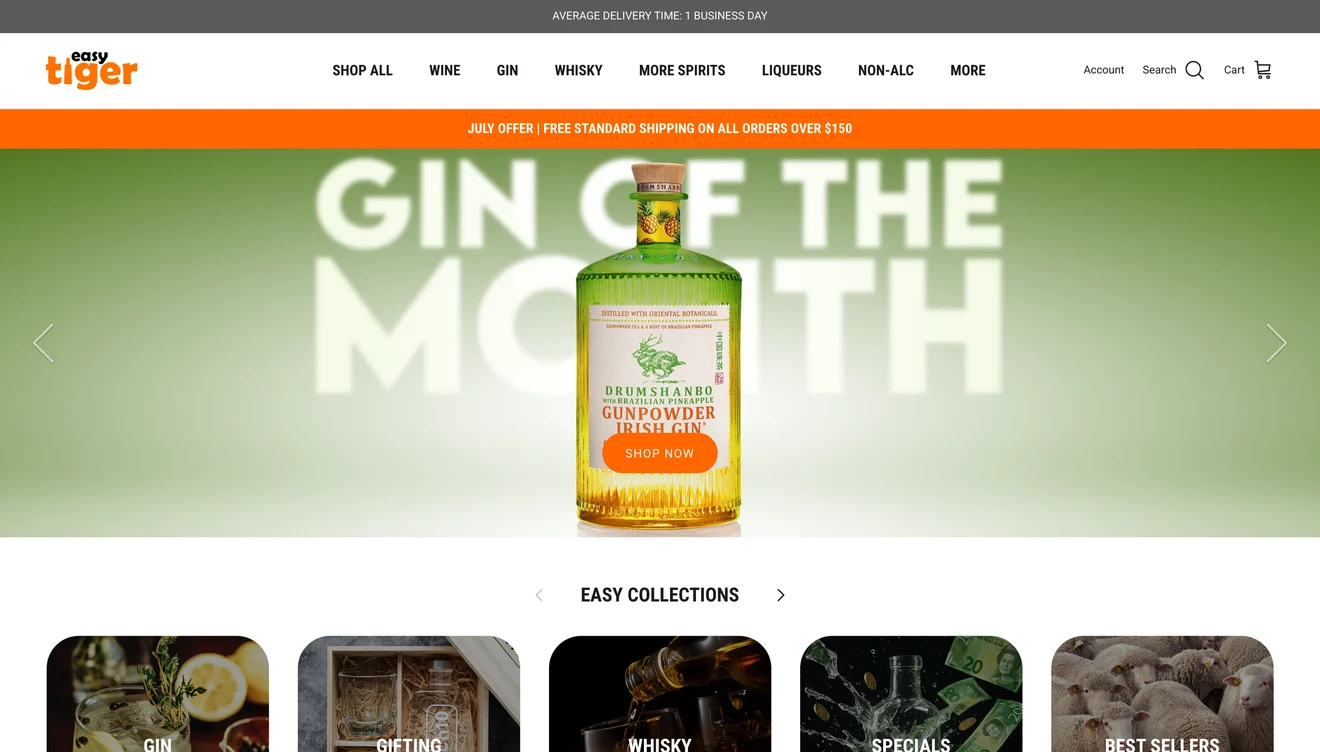
A busy account with no read on which categories actually paid.
Easy Tiger sells spirits online across New Zealand. The account was active and looked busy, but the economics underneath were soft, and no one could say which part of the range was really carrying the business.
Two things were in the way. The attribution was wrong, so the numbers guiding every decision did not reflect what was actually selling. And there was no read on average order value by product category, so the store could not see that some categories were worth far more per order than others.
Without that, spend was spread across the range by habit rather than by value, and a lot of the budget was working hard for orders that were smaller than they needed to be.
Fix the attribution, read AOV by category, then back the winner.
The work went into the account's own data to answer two questions it had never had answered: are the numbers even right, and which categories are actually worth the most per order.
The tracking was rebuilt so the account counted real purchases and real revenue. Every reported number tied back to what actually landed in the till, which is the foundation every decision after it stands on.
With clean data, the range was broken down by average order value per product category, a view the store had never had. It made plain that not every category was worth the same, and that the budget was not going where the value was.
The data showed wine carried a far higher average order value than the rest of the range. So the advertising was retargeted toward wine, putting spend behind the orders that were worth the most. Selling more of what actually paid is what drove the new revenue.
NZ$330k in new revenue, from backing the category that paid.
Clean attribution and a clear read on AOV by category reset where the money went. Pointing the spend at wine, the highest-value category, lifted both the volume of orders and their value, and generated NZ$330k in new revenue on the same store and team.
The gain came from selling the right thing, not spending more. Honest attribution plus a clear read on AOV by category showed that wine was worth far more per order, so the spend moved to it, and NZ$330k in new revenue followed on the same store and team.