The report looks healthy. The bank account disagrees.
This is one of the most common positions a growing Shopify brand ends up in, and it is almost never because anyone is doing anything wrong. It is a gap between what ad reporting can measure and what a business needs to decide with.
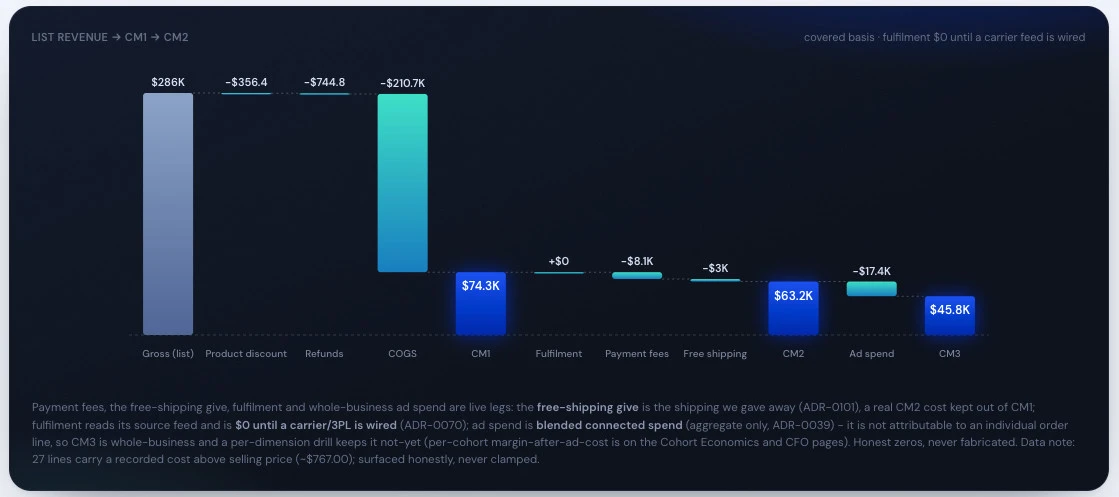

Your agency is working from the same shallow numbers you are.
It is tempting to read a flat quarter as someone not trying hard enough. That is rarely what is happening. Good agencies test constantly, and the people on your account usually want the same outcome you do.
The reporting everyone looks at, on both sides, is not deep enough to scale a business on. They are making calls from the same partial picture you are reading.
We are not an agency and we do not run ads. Swapping agencies while the measurement stays the same tends to reproduce the same quarter with different people in the meeting.
Five things brands in this position tend to recognise.
The deck says the quarter went well. What you are taking home says something else, and you do not know which number to interrogate first.
It worked early. It stopped working. With nothing deeper to point at, more budget is the only lever anyone can confidently recommend.
How your own business performed arrives on someone else's reporting cycle, so the month is over before the information is actionable.
If the relationship ended tomorrow, most of the reasoning about what works would leave with it. That is a risk regardless of how good the partner is.
Theirs shows one thing, your accounts show another, and neither side can settle it, because both are technically right about different measurements.
Two readings of the same month, both technically correct.
- Attributed revenue$486,000
- Reported return4.1x
- Orders claimed3,240
- VerdictHealthy
- Orders you really took2,410
- Of those, first-ever buyers611
- Spend against new customers$71 each
- VerdictFlat
Demonstrative Nobody has done anything wrong here. Meta counts the order, Google counts the same order, and each is reporting honestly about its own contribution. Added together, the reporting simply describes more orders than your store took.
Three measurement problems, none of them anyone's fault.
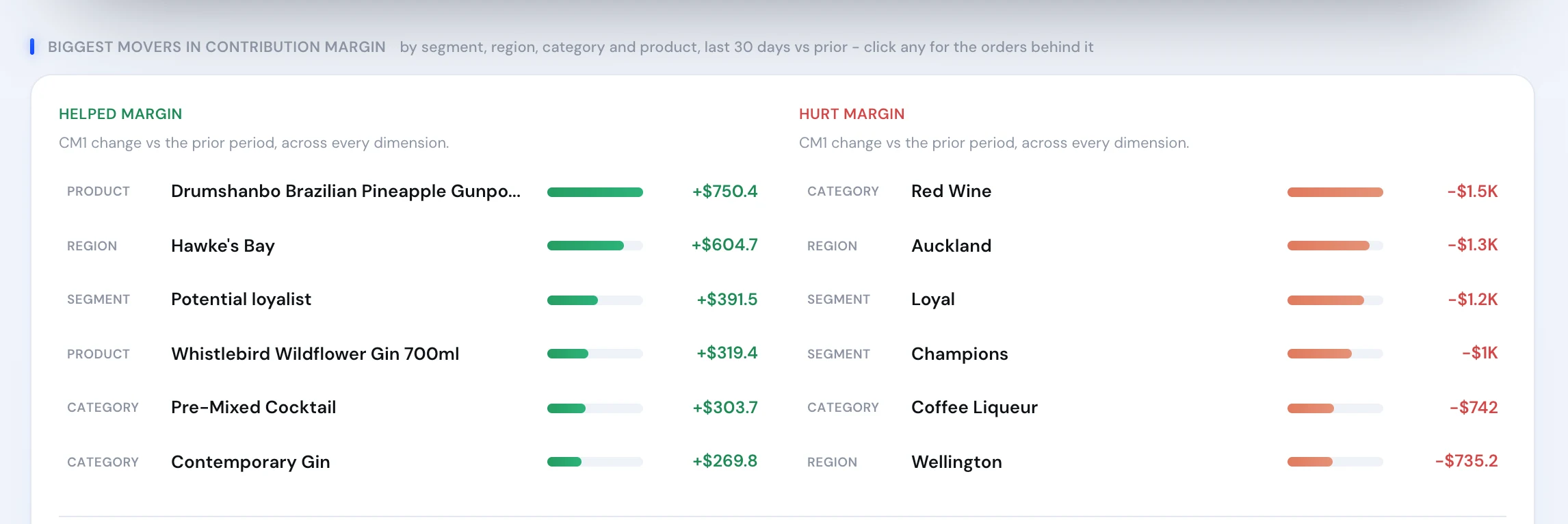
The same sale gets claimed twice
Each platform reports honestly about its own contribution, but added together your reporting describes more orders than you took. This is the single biggest source of the gap between a good report and a quiet bank account.
The arithmetic, in full The Math →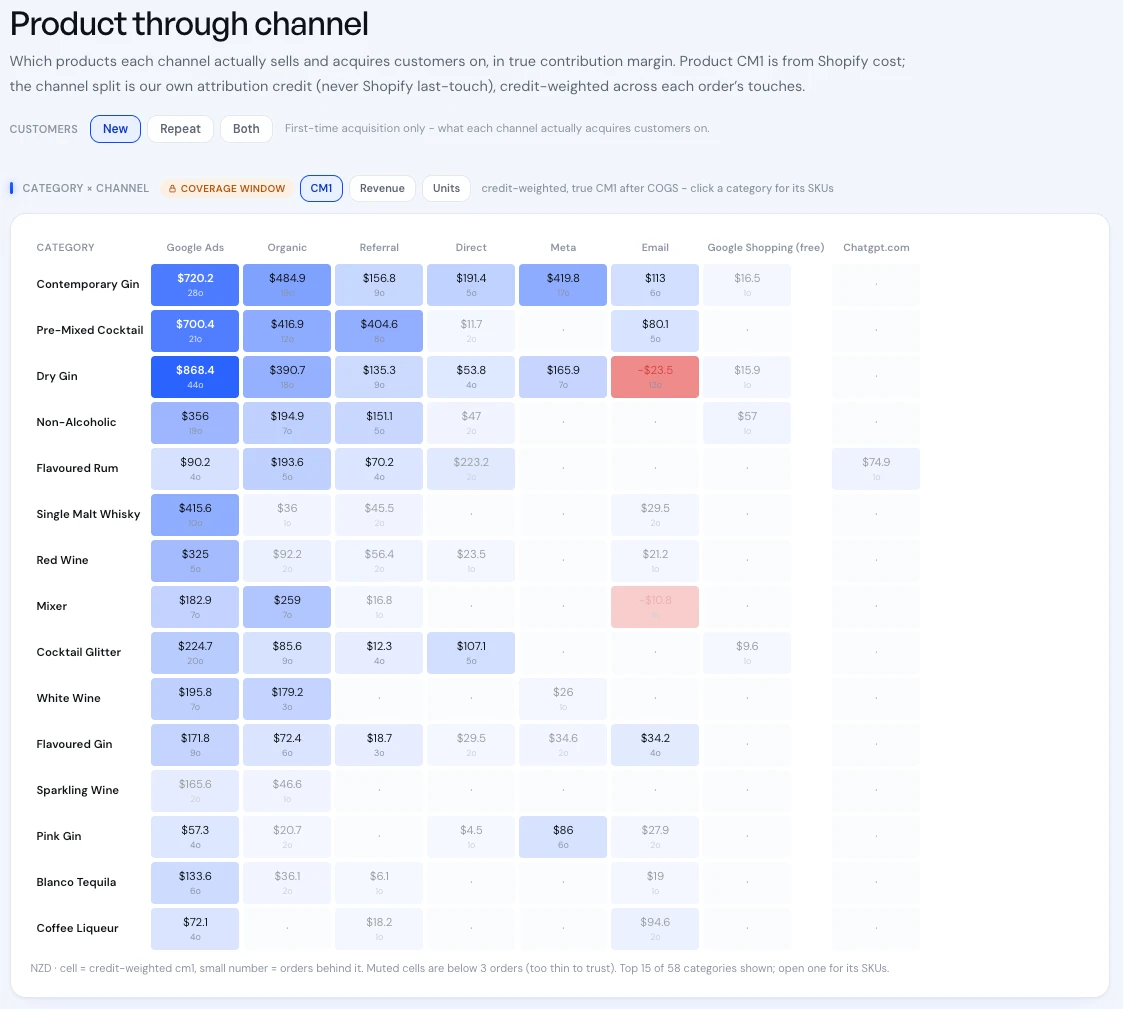
Caused and harvested look identical
A channel reaching people already on their way to buying reports beautifully. A channel genuinely bringing in new customers often reports worse, because new customers cost more up front. Budget flows to the wrong one.
See it in the product breakdown Marketing →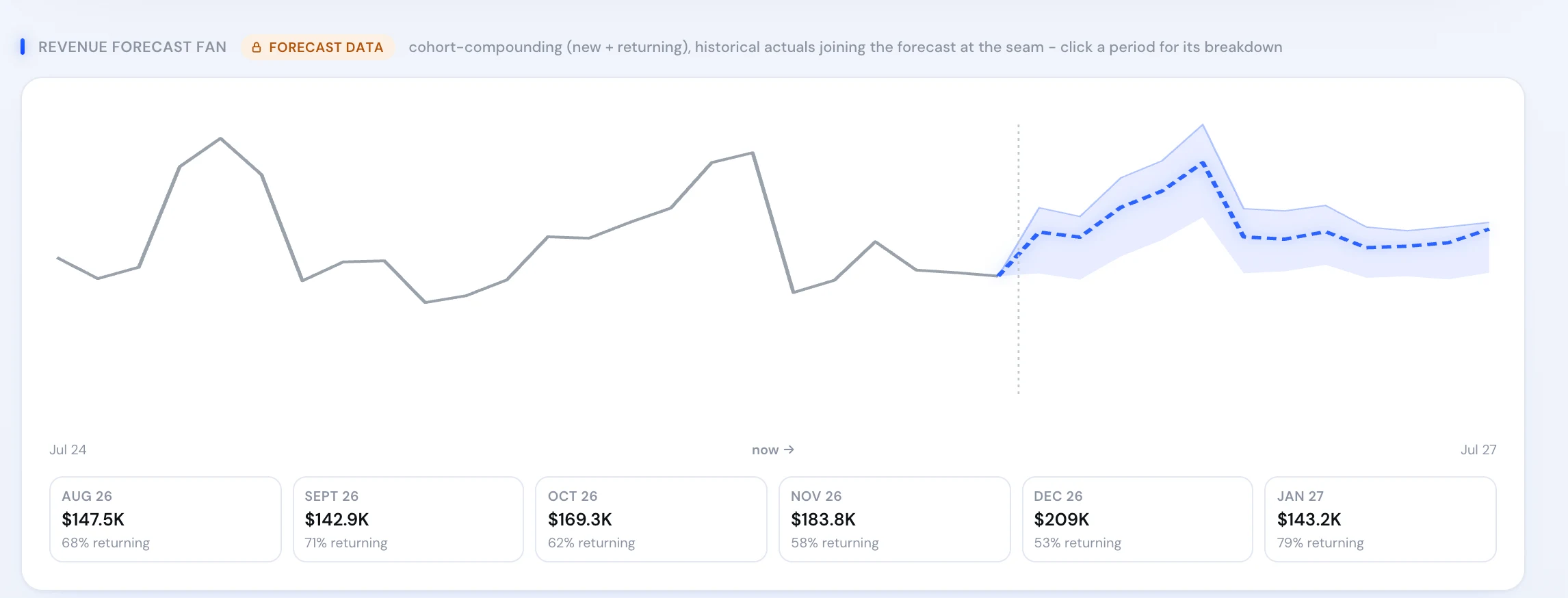
Nobody can hold a position
Without a payback window in front of you, the cautious call is always to retreat. So the scale-ups that were actually working get pulled back in week one, by people acting entirely reasonably on the information they had.
See it in the product breakdown Customers →Spend goes up. Day one dips. It gets pulled back.
Five hundred a day becomes six hundred. Day-one return drops around twenty per cent. Someone calls it dead and the budget goes back where it was.
That dip is normal when you start reaching people who were not already about to buy. Whether it worked depends on what those customers are worth over time and how long the spend takes to pay back.
Not carelessness. Missing information. Give a good agency that depth and they hold the position instead of retreating from something that was working.
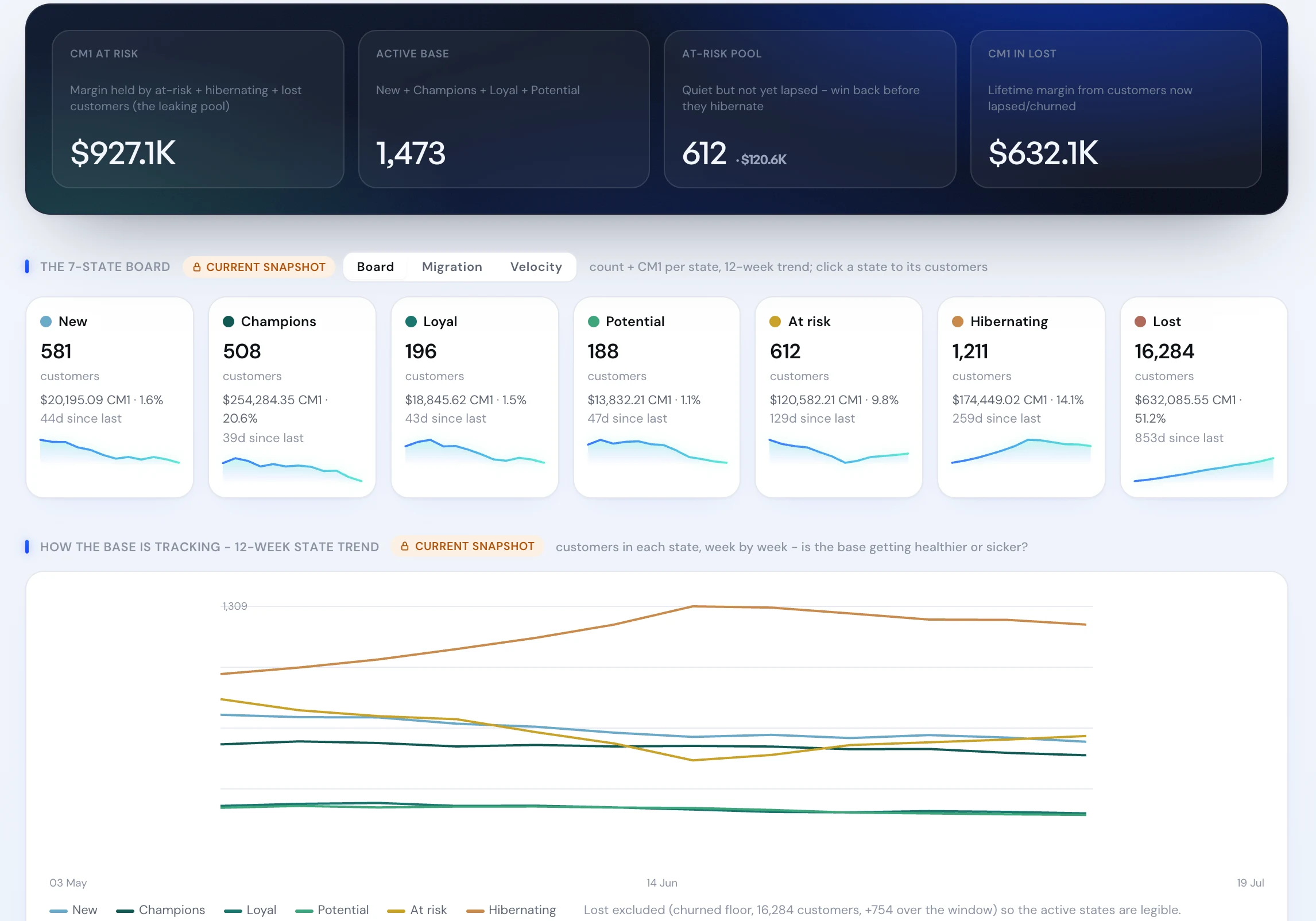
Better information makes a good partner more useful, not less.
-
The arguing stops being about whose number is right.
One reconciled view removes the part of the conversation nobody enjoys. What is left is the decision, which is the part they are good at.
-
Spend more becomes spend here.
Once new-customer acquisition is visible per channel, there is something specific to move budget toward, which is a far easier recommendation for anyone to make.
-
Scale-ups survive the first week.
With a payback window in front of both of you, a day-one dip reads as expected rather than as a reason to retreat.
-
The knowledge stays in your business.
Not as insurance against anyone. It means you could brief a new partner properly, bring something in-house, or simply understand your own account, from a position of knowing.
Most of our customers give their agency access on day one. In practice the agency is usually the first to ask for it.
Brands that could finally trust the number.

Menswear. The spend could not be trusted, so it could not be scaled. The double-counted attribution got fixed, then the funnels were rebuilt around new customers.
Read the story →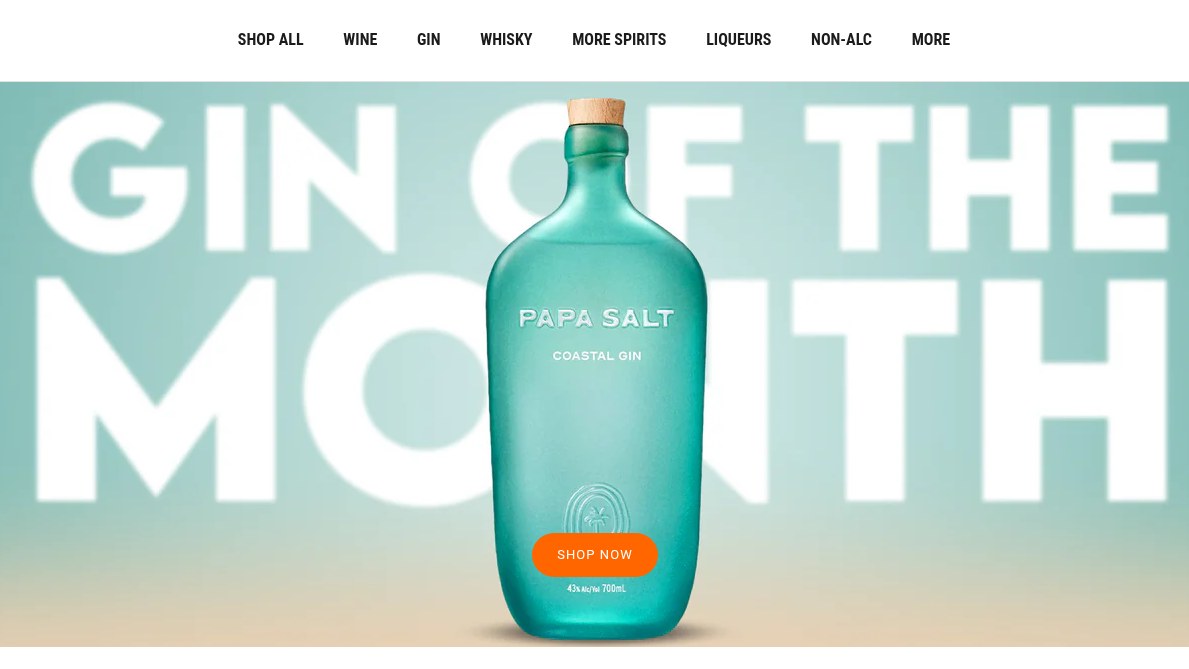
Spirits retailer. The far higher order value hiding in one category surfaced, and the category that actually paid got backed.
Read the story →
A price-led category with no brand and no history to lean on. Price treated as data and conversion treated as a system, inside twelve months.
Read the story →Individual results vary with cost structure, margin, category and execution. Each figure comes from the case study it links to.
We do not run ads. We are the layer underneath whoever does.
Blufire connects to Shopify, Meta, Google and Klaviyo and runs this every night. Every free trial includes a Free Analytics Session, worth $500, where our lead analyst does the first pass on your store with you. Free for 30 days. Free to install.
From 1,125 a month, banded on your trailing twelve-month revenue. Pricing is public.