Same revenue. Same spend. No idea what to change.
Almost every Shopify brand that stalls stalls the same way, and it is rarely that the market ran out or the team stopped trying. It is that the numbers everyone decides on stopped being deep enough to decide with.
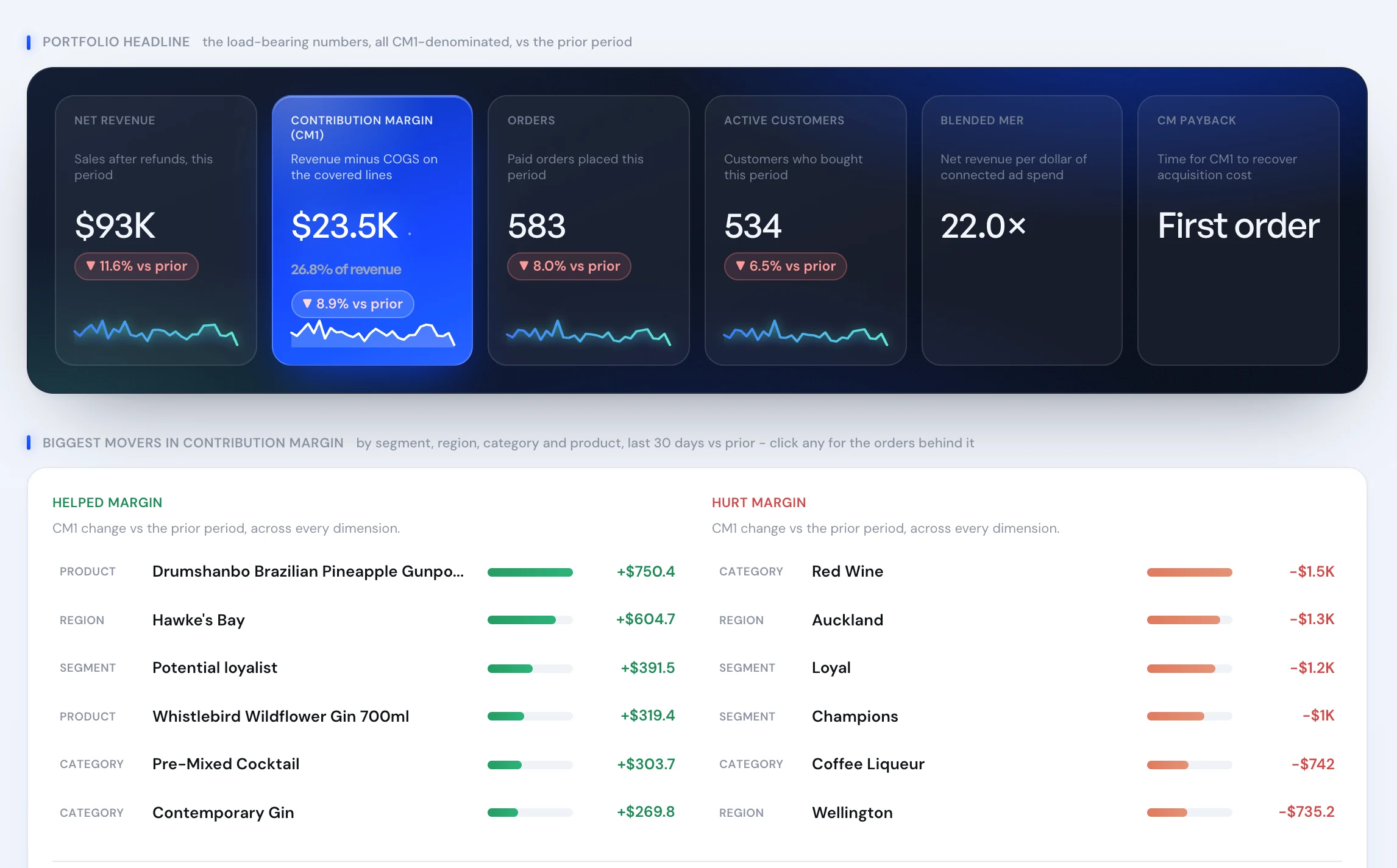
It does not feel like failing. That is what makes it hard to fix.
- You scaled once, and it worked. Then it stopped. Spend goes up, return does not, and every month reads like the last one.
- You are in the reports more than ever. Same numbers, same places, and none of them say what to do next. The work moved from building to reviewing.
- You will not touch what is working. The campaign carrying the account is the one thing you are sure of, so it becomes untouchable. Rational, and also the ceiling.
- Every option looks equally plausible. More budget, new creative, a new channel, a price change. With nothing to separate them, the safe move is to repeat last month.
Two readings of the same month, both technically correct.
- Attributed revenue$486,000
- Reported return4.1x
- Orders claimed3,240
- VerdictHealthy
- Orders you really took2,410
- Of those, first-ever buyers611
- Spend against new customers$71 each
- VerdictFlat
Demonstrative Both columns can be true at once. Meta counts the order, Google counts the same order, and added together the reporting describes more orders than you took. Nothing in that is dishonest. It simply cannot tell you whether the spend produced the sale or arrived just before it.
The arithmetic behind this, in full The Math →Three things that turn the guess back into a decision.
New customers, separated out
Not orders. First-ever orders, per channel, per campaign. The moment you can see which spend brings people who were not already yours, the ranking of your channels changes and usually inverts.
See it in the product breakdown Marketing →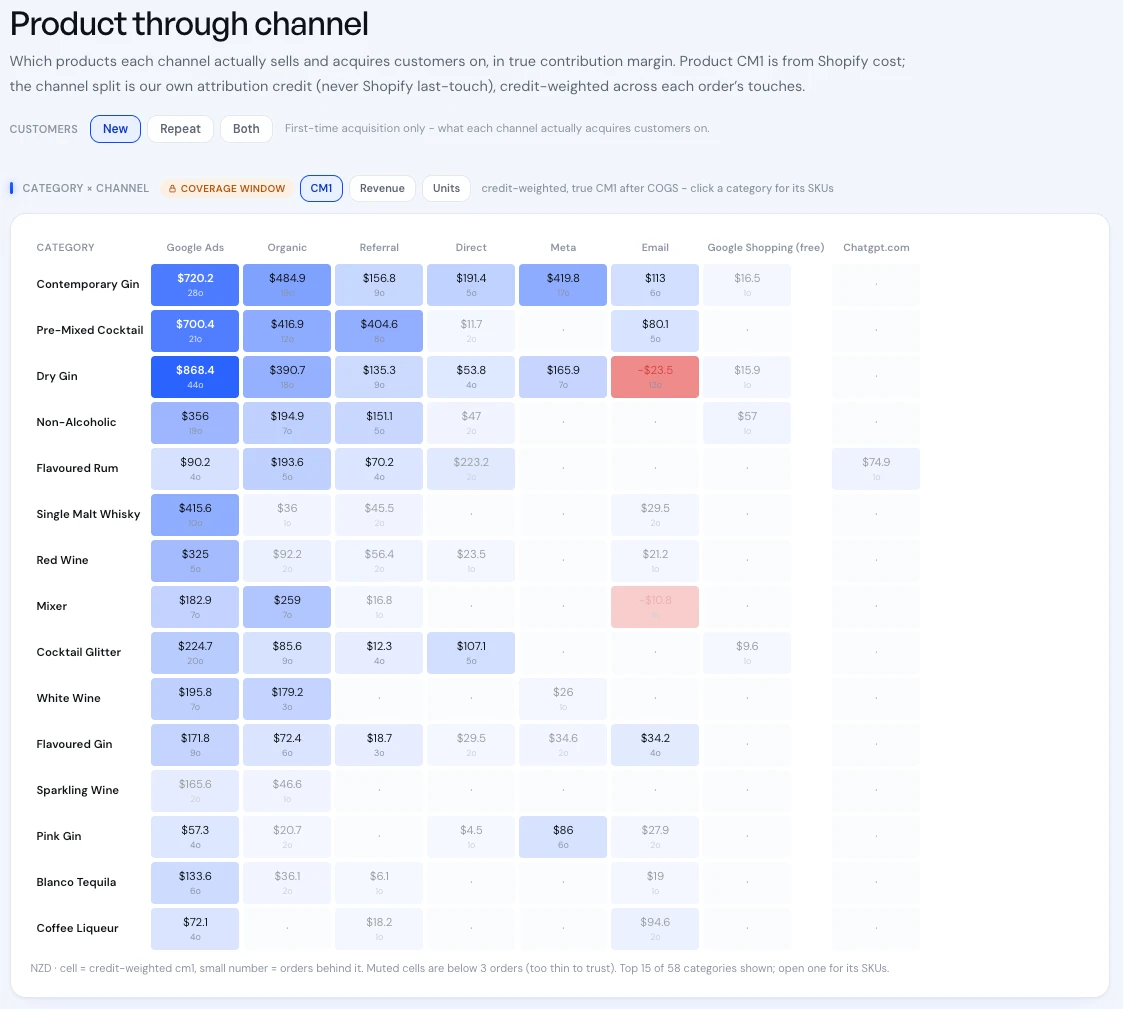
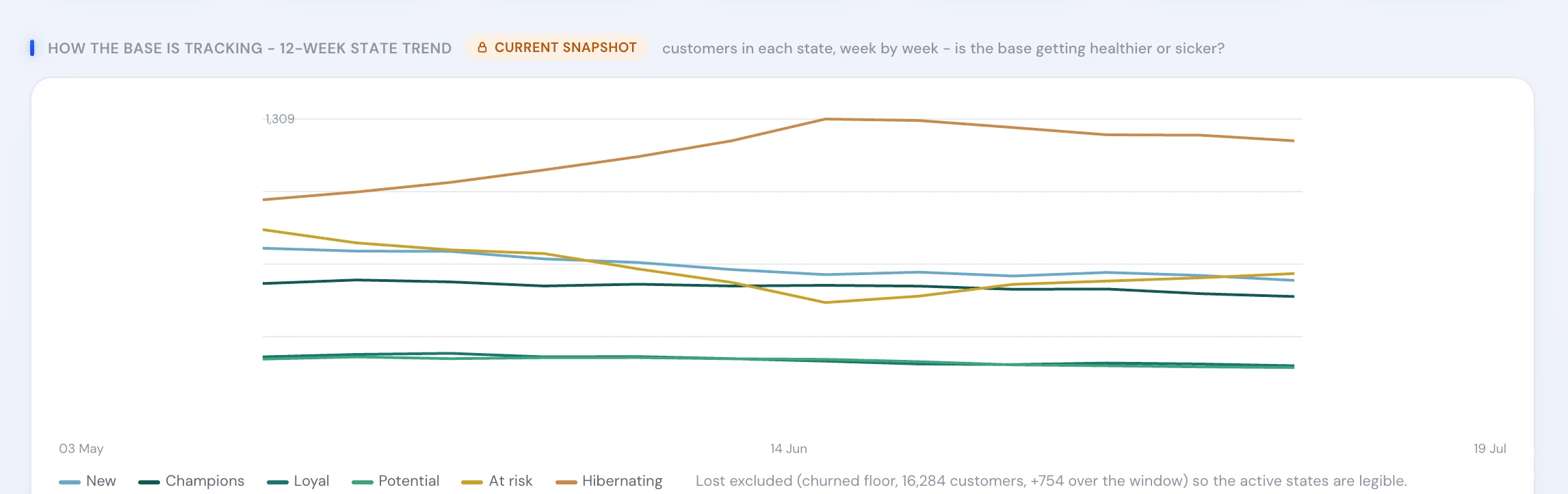
How long a customer takes to pay back
A scale-up only looks like a failure if you judge it on day one. Knowing the payback window is what lets you hold a position through the dip instead of retreating from something that was working.
See it in the product breakdown Customers →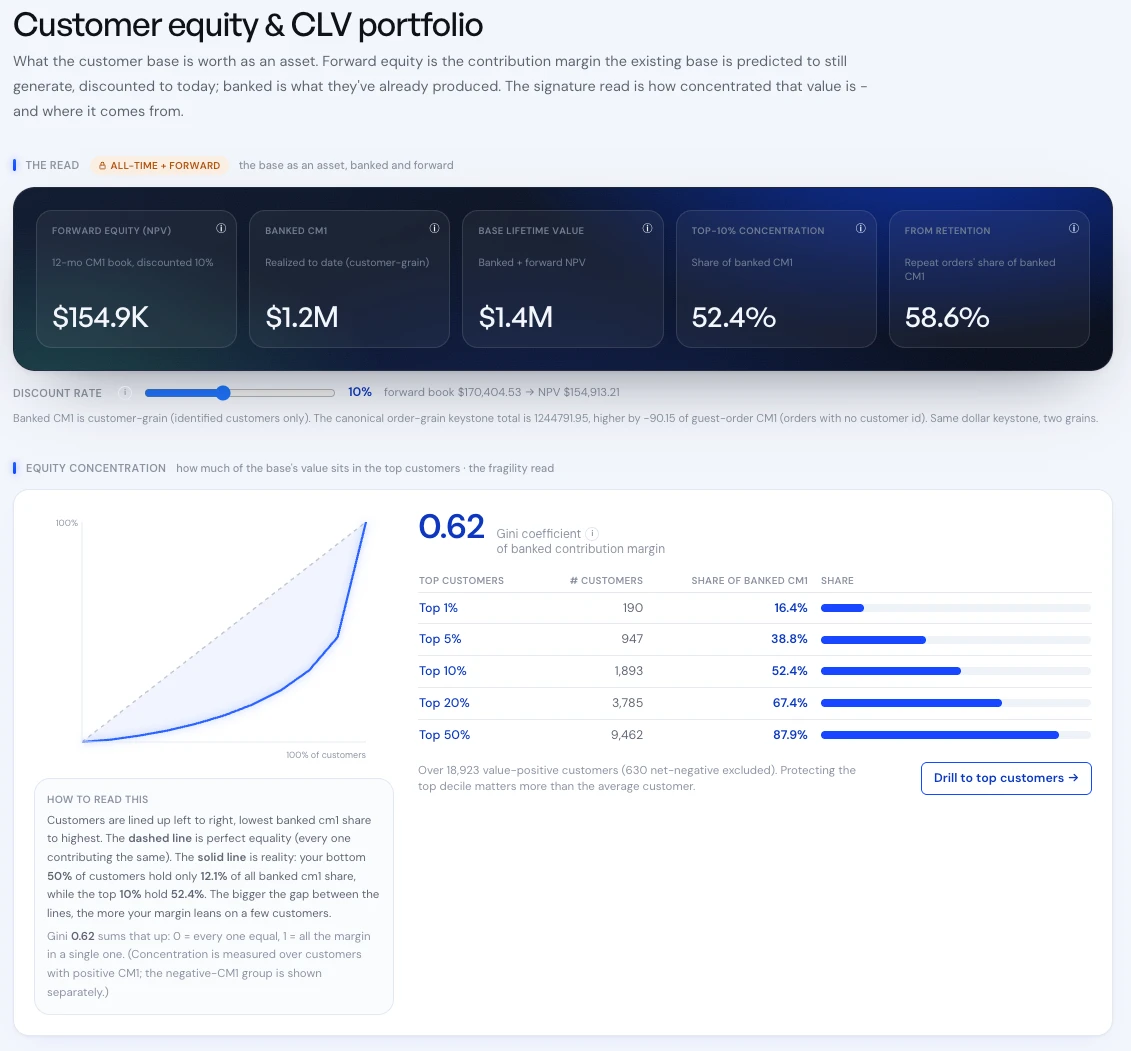
Which discounts are quietly capping you
Some of a plateau is not acquisition at all. It is a code that trains people to wait for the next sale. Seeing which customers ever graduate to full price is what tells you whether a discount bought growth or rented it.
See it in the product breakdown Money →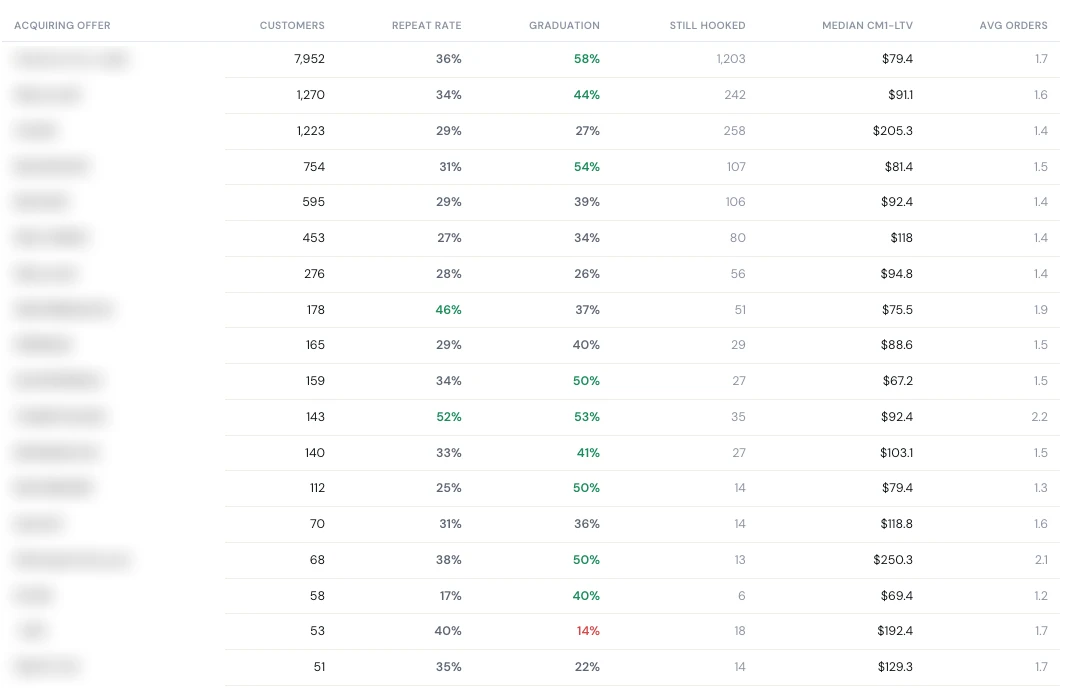
Spend goes up. Day one dips. It gets pulled back.
Five hundred a day becomes six hundred. Day-one return drops around twenty per cent. Someone calls it dead and the budget goes back where it was.
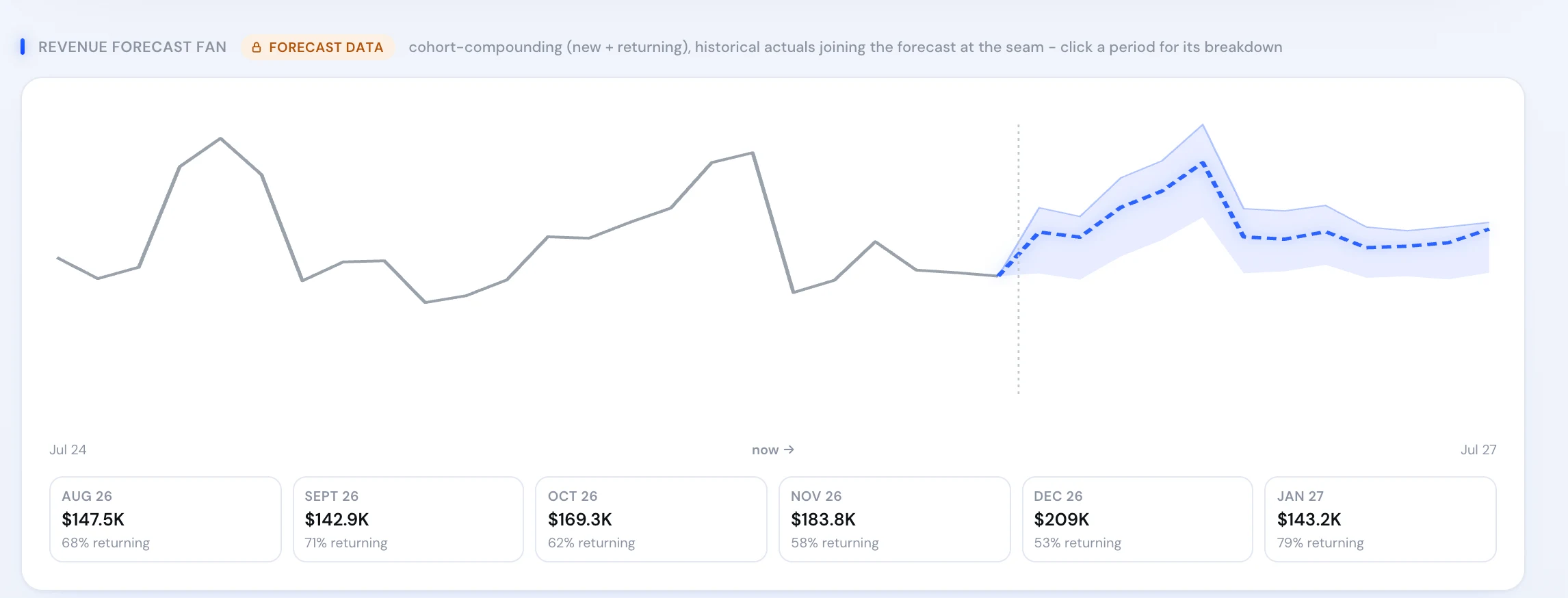
That dip is normal. You have started reaching people who were not already about to buy, and new customers cost more up front. Whether it worked depends on what they are worth over time and how long the spend takes to pay back.
Almost nobody is tracking that, so genuinely working scale-ups get killed a week in, every time.
The order of operations matters more than the tooling.
-
Get the costs in before you look at anything.
Cost of goods, shipping, fulfilment, fees, returns. Where one is missing it should stay visibly missing rather than be treated as zero, because a confidently wrong number is worse than an admitted gap. Most of the surprises live here.
-
Reconcile the channels to your actual orders.
Until the totals tie back to the orders in your store, every comparison between two channels is a comparison of two different claims.
-
Split caused from harvested.
New-customer acquisition on one side, repeat purchasing on the other. This is the step that reorders your channel ranking, and usually the one that explains the plateau.
-
Then change one thing, and hold it.
With payback windows visible you can scale a position through the day-one dip, because you know what you are waiting for rather than hoping.
Brands that were stuck, once they could see it.

Menswear. The spend could not be trusted, so it could not be scaled. The double-counted attribution got fixed, then the funnels were rebuilt around new customers.
Read the story →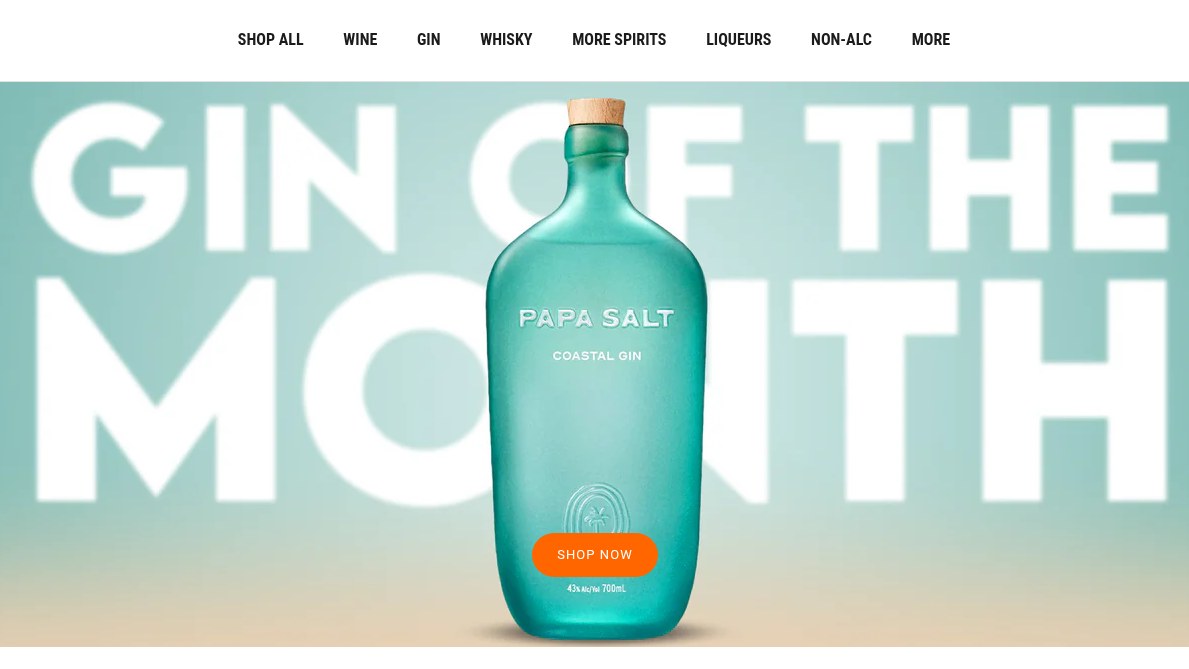
Spirits retailer. The far higher order value hiding in one category surfaced, and the category that actually paid got backed. One lifecycle flow cut churn about twenty per cent.
Read the story →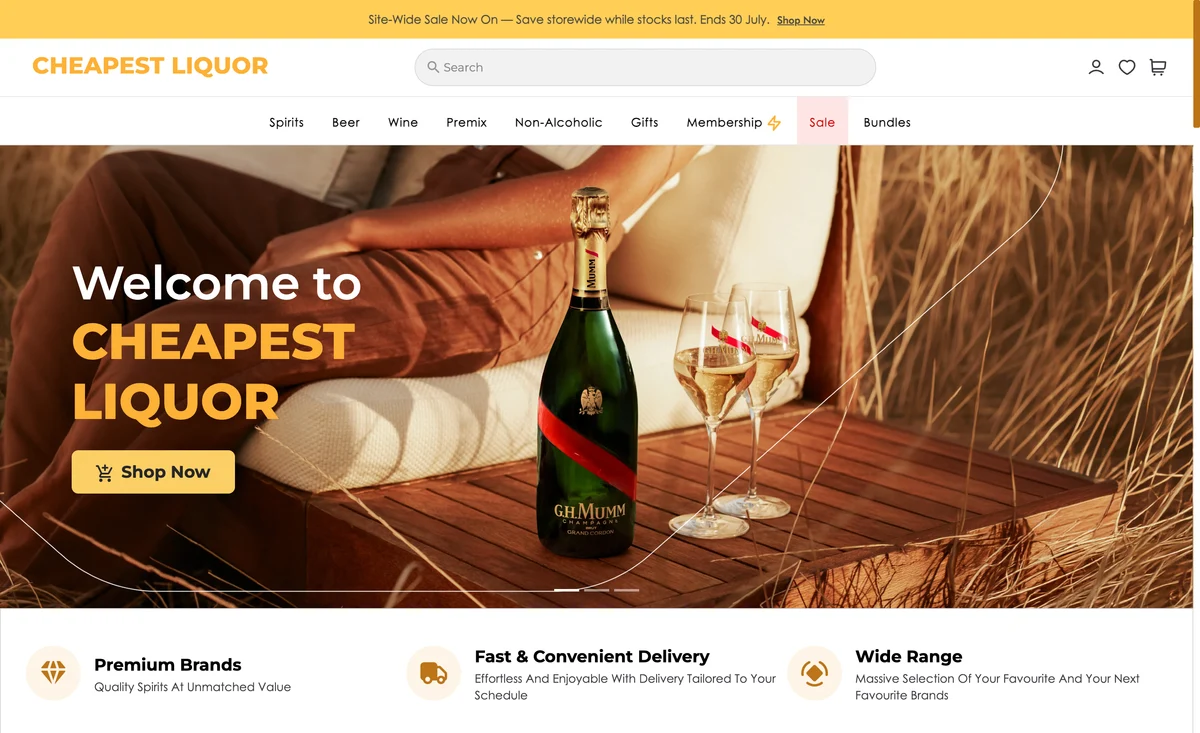
A price-led category with no brand and no history to lean on. Price treated as data and conversion treated as a system, inside twelve months.
Read the story →Individual results vary with cost structure, margin, category and execution. Each figure comes from the case study it links to.
You do not have to work it out on your own.
Blufire connects to Shopify, Meta, Google and Klaviyo and runs this every night. Every free trial includes a Free Analytics Session, worth $500, where our lead analyst does the first pass on your store with you. Free for 30 days. Free to install.
From 1,125 a month, banded on your trailing twelve-month revenue. Pricing is public.